Content
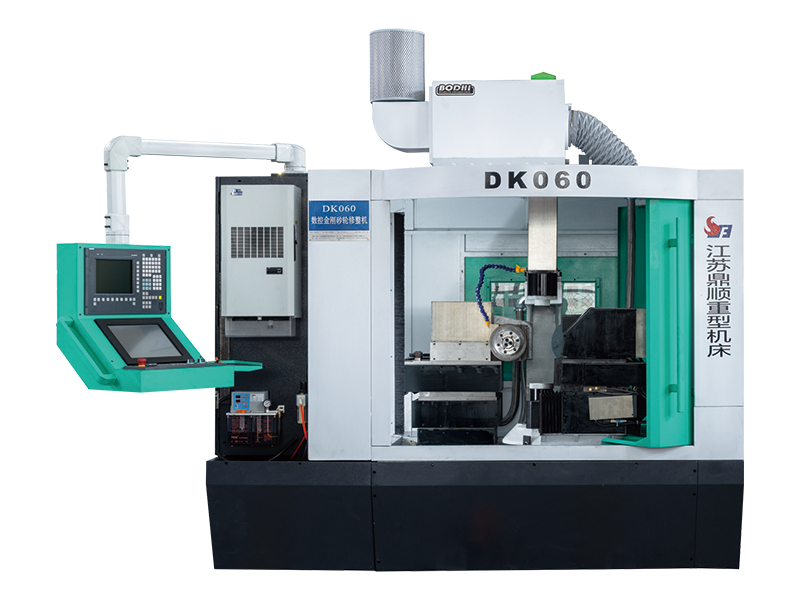
A diamond wheel dressing grinder is a precision tool used to restore, reshape, and condition the cutting surface of grinding wheels — particularly superabrasive wheels such as diamond or cubic boron nitride (CBN) wheels. Over the course of regular grinding operations, abrasive wheels become dull, loaded with workpiece material, or geometrically distorted. When this occurs, the wheel no longer cuts efficiently: it generates excessive heat, produces poor surface finishes, and applies uncontrolled forces on the workpiece that can lead to dimensional inaccuracies or component rejection. The diamond wheel dressing grinder addresses all of these problems by precisely removing a controlled layer of the wheel's bond and abrasive material to expose fresh, sharp cutting grains and restore the wheel's correct profile.
The term "dressing" encompasses two related but distinct operations. Truing refers to the process of making the wheel geometrically correct — ensuring it runs concentric with the spindle axis and has the precise profile required for the workpiece geometry. Dressing refers specifically to conditioning the wheel surface to create the correct cutting topography, including the density and protrusion height of the abrasive grains above the bond matrix. A diamond wheel dressing grinder performs both functions in a single controlled operation, making it a fundamental piece of equipment in any precision grinding environment where consistent output quality and repeatable dimensional tolerances are non-negotiable requirements.
To appreciate the importance of diamond wheel dressing, it is essential to understand the mechanisms by which grinding wheels degrade during use. A grinding wheel cuts by the action of thousands of individual abrasive grains, each acting as a miniature cutting tool. As the wheel removes material from the workpiece, these grains experience progressive wear through three primary failure modes:
Each of these degradation mechanisms has a direct negative impact on part quality, cycle time, and grinding wheel consumption rate. Regular, correctly executed dressing with a diamond wheel dressing grinder is the only effective counter-measure.
Surface finish and dimensional accuracy are the two primary quality metrics in precision grinding, and both are profoundly influenced by the condition of the grinding wheel surface. A freshly dressed wheel presents a uniform array of sharp, correctly protruding abrasive grains that each take a consistent, light chip from the workpiece surface. This produces a predictable, fine surface finish with Ra values that fall reliably within specification. As the wheel degrades between dressing cycles, the cutting action becomes increasingly inconsistent — some grains cut aggressively, others rub, and loaded areas smear rather than cut — producing a surface with irregular Ra values, directional chatter marks, and thermal discoloration.
Dimensional accuracy is equally sensitive to wheel condition. In precision cylindrical grinding, surface grinding, and internal grinding operations, the machine's CNC system assumes that the wheel is removing material at the programmed rate and that the wheel radius remains as specified. A deteriorated wheel that deflects under cutting force or wears rapidly at an unpredictable rate introduces systematic dimensional errors that accumulate across a production run. Regular dressing with a diamond wheel dressing grinder — combined with an in-process gauging system that triggers automatic dress cycles at defined intervals — is the standard approach in high-volume precision manufacturing to maintain dimensional consistency within tolerances of just a few micrometers across thousands of parts.
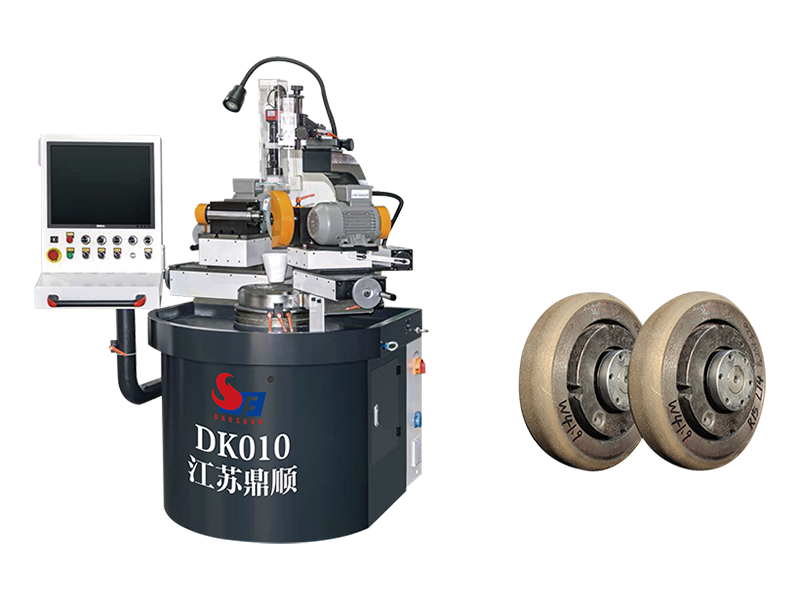
Diamond is specified as the dressing tool material of choice because of its unmatched combination of hardness, thermal conductivity, and wear resistance. At approximately 10 on the Mohs hardness scale, diamond is the hardest known naturally occurring material and can abrade the bond matrix and abrasive grains of any grinding wheel type, including CBN and silicon carbide wheels, with precision and control that no alternative material can match. The following comparison illustrates why diamond-based dressing tools dominate precision grinding applications:
| Dressing Tool Type | Hardness | Profile Accuracy | Tool Life | Best Application |
| Single-Point Diamond | Very High | High | Long | Flat and cylindrical wheel faces |
| Diamond Rotary Dresser | Very High | Very High | Very Long | CNC form grinding, high-volume production |
| Diamond Roll Dresser | Very High | Excellent | Very Long | Complex profile grinding at high speed |
| Star Dresser (Steel) | Medium | Low | Short | Rough dressing, non-precision work |
| Abrasive Dressing Stick | Low–Medium | Low | Short | Superabrasive wheel opening only |
The data above makes clear that diamond-based dressing systems — whether in single-point, rotary, or roll configurations — consistently deliver superior profile accuracy and tool life compared to non-diamond alternatives. For any grinding operation where part quality and production consistency are the primary goals, the investment in diamond wheel dressing tooling is fully justified by the reduction in scrap rate, rework labor, and wheel consumption costs it enables.
One of the most economically significant benefits of correct diamond wheel dressing grinder use is the extension of the grinding wheel's productive service life. Grinding wheels — particularly superabrasive diamond and CBN wheels — represent a substantial capital investment. A large-diameter CBN wheel for automotive camshaft grinding, for example, can cost several thousand dollars. Managing this investment through optimized dressing practice directly impacts the cost per part and overall grinding cell profitability.
The key to maximizing wheel life lies in minimizing the amount of abrasive material removed during each dressing cycle while still achieving the required wheel condition. This is controlled through two primary dressing parameters: the dressing depth (the radial infeed per pass of the diamond dresser) and the dressing lead (the traverse rate of the dresser across the wheel face). Shallow dressing depths in the range of 0.005 to 0.02 mm per pass, combined with slow traverse rates, produce a fine, closed wheel surface suited to finishing cuts. Deeper infeed and faster traverse create a more open, aggressive surface suited to roughing operations. Using a diamond wheel dressing grinder with CNC-controlled dressing axes allows these parameters to be programmed precisely and repeated identically at every dress cycle, eliminating the variability introduced by manual dressing operations.
Dressing frequency is equally important. Under-dressing — allowing the wheel to degrade too far between dress cycles — forces the operator to remove more material per dressing event to restore the wheel, accelerating overall wheel consumption. Over-dressing — dressing too frequently or removing too much material per cycle — wastes expensive abrasive unnecessarily. Establishing the optimal dressing interval through systematic process monitoring, using parameters such as grinding power consumption, acoustic emission signals, or in-process surface finish measurement, is the foundation of a wheel life optimization strategy.
The importance of diamond wheel dressing grinders is best understood by examining the industries and applications where imprecise wheel condition would directly result in product failure, safety risks, or unacceptable quality costs.
Turbine blades, compressor discs, and structural titanium components in aerospace require grinding tolerances in the single-digit micrometer range, with surface integrity requirements that prohibit any thermal damage to the near-surface material zone. Grinding burn or re-hardened zones on aerospace components can cause fatigue crack initiation under service loading, with potentially catastrophic consequences. Diamond wheel dressing grinders with precisely controlled dressing parameters are used throughout aerospace grinding to ensure that every pass of the wheel presents a consistently sharp, correctly conditioned cutting surface that removes material without generating damaging heat.
Crankshafts, camshafts, gears, and bearing races in automotive powertrain production are ground in very high volumes with extremely tight dimensional tolerances and surface finish specifications. In these environments, automated in-process dressing systems integrated directly into CNC grinding machines perform dress cycles after every few parts or after a defined number of grinding passes, maintaining consistent wheel condition throughout a production shift without operator intervention. The diamond rotary dresser, driven at a precisely controlled speed ratio relative to the grinding wheel, is the standard tool in this application for its ability to generate repeatable wheel topographies cycle after cycle.
Orthopedic implants, surgical instrument components, and dental prosthetics manufactured from cobalt-chrome, zirconia, and medical-grade titanium require grinding processes that deliver both geometric precision and metallurgically undamaged surfaces. Residual stresses introduced by improper grinding can compromise corrosion resistance and fatigue life of implants operating in the human body. Diamond wheel dressing grinders used in medical device manufacturing are typically qualified as part of the validated manufacturing process, with dressing parameters documented and controlled as critical process variables under ISO 13485 quality management requirements.
Choosing the appropriate diamond wheel dressing grinder configuration requires a systematic assessment of the grinding application's specific requirements. The following factors should guide the selection process:
The diamond wheel dressing grinder is not a peripheral accessory in a precision grinding operation — it is a core process tool whose performance directly determines the quality, consistency, and economic efficiency of every part produced. Investing in the correct dressing technology, operating it with well-defined and monitored parameters, and maintaining it with the same rigor applied to the grinding machine itself are the foundational practices that separate world-class grinding operations from those that struggle with chronic quality and productivity challenges.

 Download Material

 E-mail: [email protected]
  Mob: +86-13806297906
  Tel: +86-513-85562198
  Add:No. 99 Tiantong Road, Nantong City, Jiangsu Province.
Factory scene



Copyright@ Jiangsu Dingshun Heavy duty Machine Tool Co., Ltd. All Rights Reserved.




 English
  русский
  Español
  عربى
عربى