Content
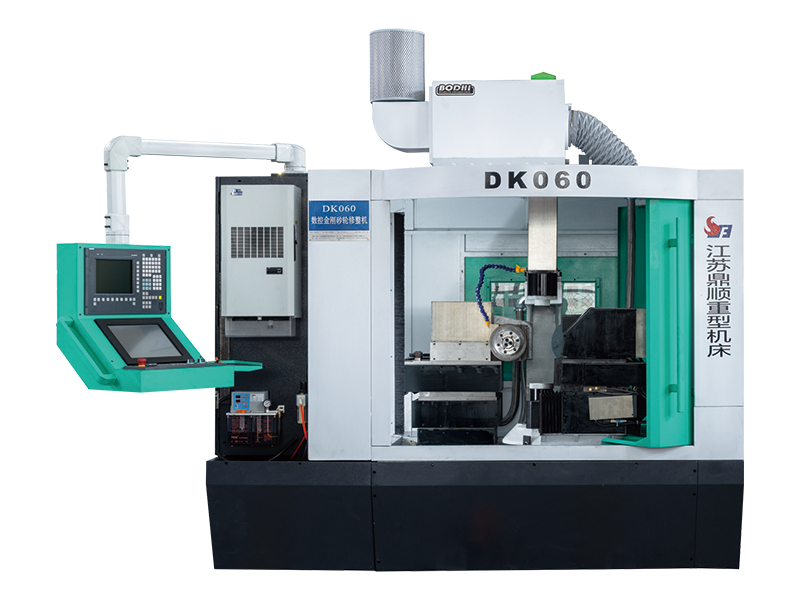
A diamond wheel dressing grinder is a tool or machine used to restore the cutting performance and geometric accuracy of grinding wheels. Over time, grinding wheels become loaded with workpiece material, lose their sharp cutting edges, and develop uneven profiles. Dressing removes the worn outer layer of the wheel, exposing fresh abrasive grains and correcting the wheel's shape. Diamond is used as the dressing material because it is the hardest known substance and can effectively cut through the abrasive grains of the wheel — whether those grains are aluminum oxide, silicon carbide, or cubic boron nitride (CBN).
The dressing process serves two distinct purposes: truing and dressing. Truing restores the geometric shape of the wheel — making it perfectly round and ensuring the face profile is correct for the intended grinding operation. Dressing opens up the wheel's surface structure, creating the porosity and sharpness needed for effective cutting action. Both functions are often performed simultaneously with a diamond dressing grinder, depending on the tool type and machine configuration in use.
Diamond dressing tools and grinders come in several distinct configurations, each suited to specific wheel types, machine setups, and production requirements. Understanding the differences between them is the first step toward selecting the right solution for your grinding operation.
The single-point diamond dresser is the most traditional and widely used type. It consists of a single natural or synthetic diamond mounted at the tip of a steel shank. The operator traverses the dresser across the face of the rotating grinding wheel at a controlled feed rate and depth. Single-point dressers are highly effective for truing and dressing straight-faced wheels used in surface, cylindrical, and centerless grinding. Their main advantage is simplicity: they are inexpensive, easy to use, and can be resharpened by rotating the shank slightly to expose a fresh diamond face. However, they wear relatively quickly when dressing harder wheels such as CBN or diamond grinding wheels.
Multi-point diamond dressers contain multiple small diamond particles distributed across the tip area, rather than a single large stone. This distributes the dressing load across several contact points, resulting in longer tool life and a more consistent surface finish on the dressed wheel. They are particularly well suited for high-production environments where dressing frequency is high and consistent wheel topography is critical. Multi-point dressers produce a slightly different surface texture compared to single-point tools — typically a finer, more uniform cutting surface — which can be advantageous when grinding components that require low surface roughness.
Rotary diamond dressers, also known as diamond dressing rolls or rotary dressing discs, use a rotating disc or roll impregnated with diamond particles to condition the grinding wheel. The dressing roll is driven either by a separate motor or by contact with the grinding wheel itself (a configuration called crush dressing). Rotary dressers are highly efficient and capable of reproducing complex profiles on the grinding wheel face with excellent repeatability. They are the preferred choice in CNC grinding machines where automated dressing cycles are programmed and profile accuracy is paramount. The trade-off is cost: rotary diamond dressers are significantly more expensive than stationary types, though they offer far lower cost-per-dress over long production runs.
Diamond dressing blocks and sticks are used primarily for dressing superabrasive wheels — specifically CBN and diamond grinding wheels — where conventional dressing tools are ineffective. These tools consist of a bonded block of softer abrasive material, such as white aluminum oxide or silicon carbide, embedded with fine diamond particles. When pressed against a rotating superabrasive wheel, they selectively remove the bond material between abrasive grains, opening up the wheel structure and improving cutting efficiency. They are commonly used in tool and cutter grinding, precision surface grinding, and any application where superabrasive wheel performance must be restored without altering the wheel's geometry significantly.
Blade-type and form diamond dressers are specialized tools designed to dress grinding wheels into a specific custom profile. Rather than dressing a flat or simple radius face, these tools are shaped to match the inverse of the desired wheel profile and are traversed across the wheel face to reproduce that shape precisely. They are used extensively in gear grinding, thread grinding, and the production of components with complex cross-sectional profiles. The diamond segments or blades are arranged to match the required form, and wear must be carefully monitored because any deterioration of the dresser profile will be directly transferred to the workpiece.
| Type | Best For | Profile Capability | Relative Cost |
| Single-Point | General-purpose, straight wheels | Simple flat/angle | Low |
| Multi-Point | High-production, consistent finish | Flat/moderate radius | Low–Medium |
| Rotary Roll | CNC grinding, complex profiles | Complex forms | High |
| Block/Stick | Superabrasive wheels (CBN/diamond) | Opening only | Low–Medium |
| Form/Blade | Thread, gear, and profile grinding | Custom profiles | Medium–High |
Even with the right dresser type selected, dressing results depend heavily on how the process is executed. Small mistakes in setup or technique can produce a wheel that cuts poorly, generates excessive heat, or leaves poor surface finish on workpieces. The following practical tips cover the most important parameters and habits that separate mediocre dressing results from excellent ones.
Single-point diamond dressers must be mounted at a slight angle — typically 10 to 15 degrees off vertical, inclined in the direction of wheel rotation. This angle ensures that the diamond tip contacts the wheel cleanly and prevents the dresser from being dragged into the wheel face, which would cause chipping and premature wear. The diamond should also be positioned slightly below the wheel centerline, not above it, to maintain a stable cutting action. Rotary dressers have their own speed ratio requirements specified by the manufacturer, and failing to match those ratios will result in either a too-open or too-glazed wheel surface.
The traverse feed rate of the dresser across the wheel face directly controls the resulting surface topography. A slow feed rate produces a fine, smooth wheel surface suitable for finish grinding, while a faster feed rate creates a coarser, more open structure ideal for aggressive material removal. Similarly, the depth of cut per dressing pass should be kept small — typically between 0.01 mm and 0.03 mm per pass — to avoid overloading the diamond and generating excessive heat. Taking multiple light passes is almost always better than attempting to dress heavily in a single pass.
Dressing generates significant heat at the contact zone between the diamond and the wheel. Without coolant, this heat can crack the diamond tip, damage the wheel bond, and cause thermal stresses that lead to premature wheel breakage. Always apply a generous flow of grinding coolant — water-soluble fluid or oil-based coolant depending on the process — directed precisely at the dressing contact point. Flood coolant applied from the side is often insufficient; a dedicated coolant nozzle positioned to hit the exact point of contact provides far better thermal protection and chip flushing.
Diamond dressers wear over time, and a worn dresser produces inconsistent results. For single-point tools, inspect the diamond tip regularly under magnification and rotate the shank by 30 to 45 degrees when a flat wear facet becomes visible. This exposes a fresh cutting edge and restores dressing performance. For multi-point and rotary dressers, track the total number of dresses performed and compare wheel surface quality against known good results. When dressing begins requiring more passes to achieve acceptable sharpness, it is time to replace or recondition the tool.
Many operators dress only when they notice obvious problems — burn marks, poor surface finish, or dimensional drift. In precision grinding, this reactive approach is too late. Establishing a proactive dressing schedule based on the number of parts ground or the volume of material removed keeps the wheel in optimal condition and prevents gradual quality degradation. For critical applications such as bearing races or aerospace components, dressing after every batch or at fixed material removal intervals is standard practice.
Understanding what not to do is just as valuable as knowing best practices. The following mistakes are frequently observed in workshops and lead to poor dressing results, shortened tool life, and damaged grinding wheels:
By avoiding these pitfalls and applying the practical guidelines described above, operators can significantly extend both grinding wheel life and diamond dresser life, while consistently producing workpieces that meet tight dimensional and surface quality requirements.

 Download Material

 E-mail: [email protected]
  Mob: +86-13806297906
  Tel: +86-513-85562198
  Add:No. 99 Tiantong Road, Nantong City, Jiangsu Province.
Factory scene



Copyright@ Jiangsu Dingshun Heavy duty Machine Tool Co., Ltd. All Rights Reserved.




 English
  русский
  Español
  عربى
عربى