Content
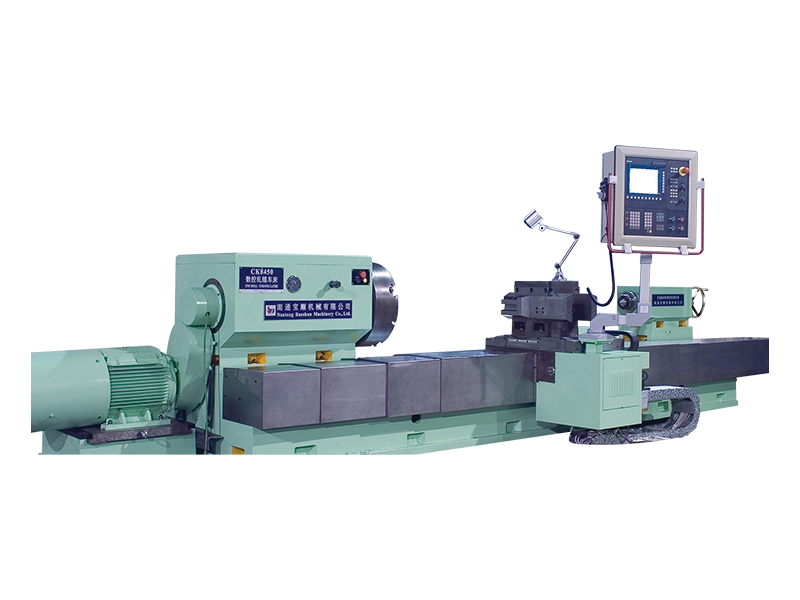
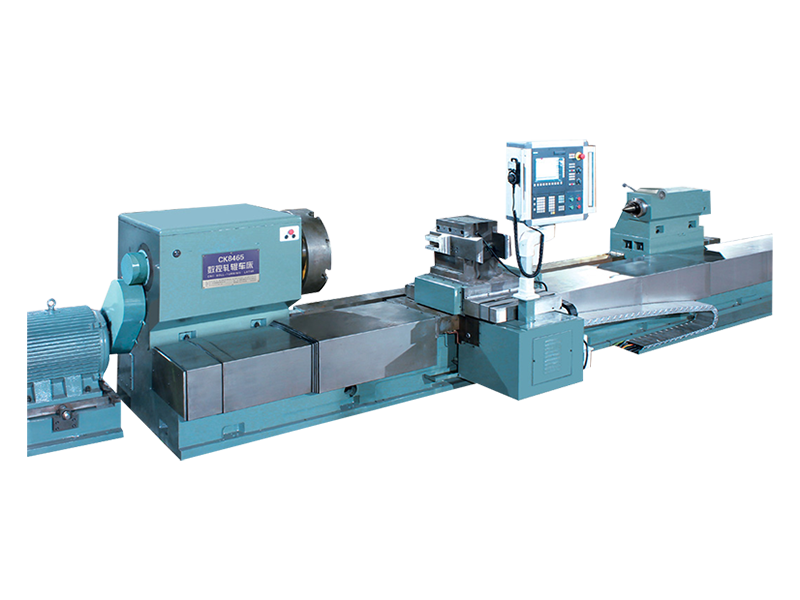
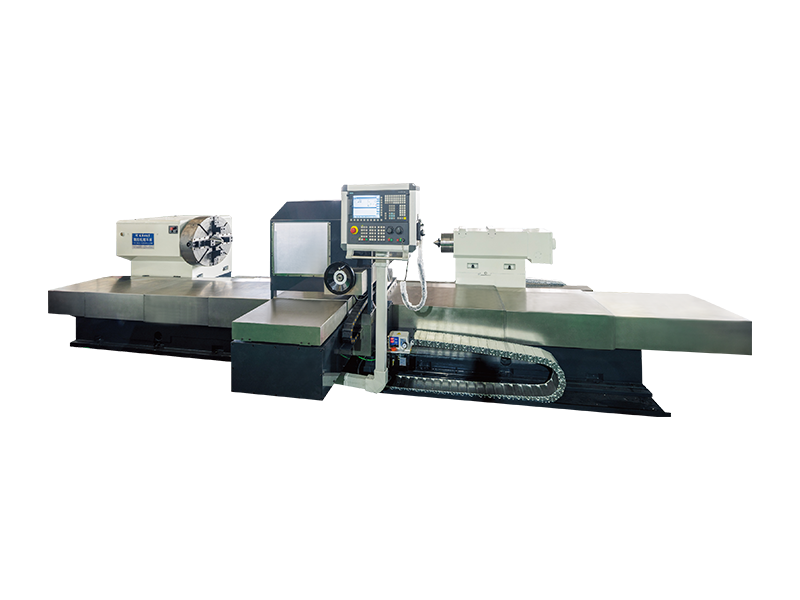
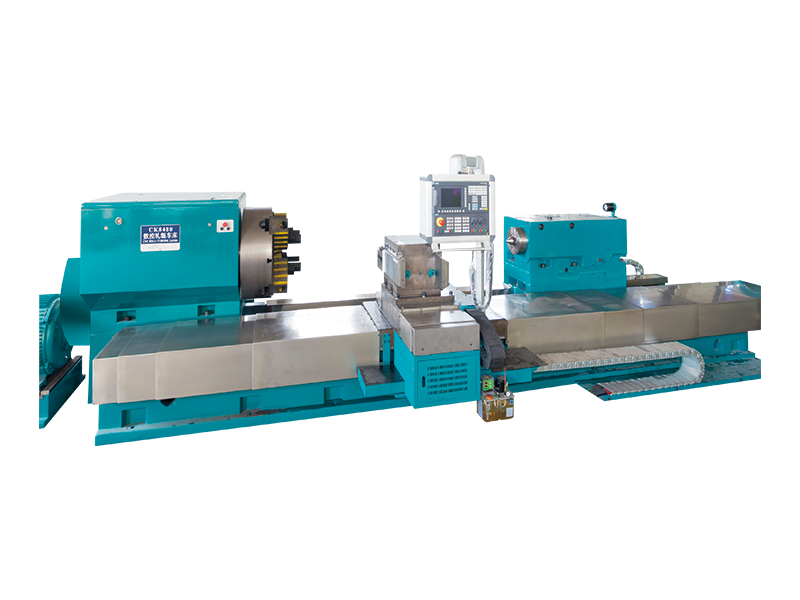
CNC roller processing machines have become foundational equipment across a wide range of manufacturing and heavy-industry sectors. By combining computer numerical control (CNC) technology with precision roller mechanics, these machines deliver repeatable accuracy, high-speed throughput, and superior surface quality that traditional manual or semi-automated systems simply cannot match. Whether shaping metal sheets, finishing cylindrical components, or forming complex profiles, CNC roller processing machines have earned their place as indispensable tools on the modern factory floor.
Understanding where and how these machines are best applied helps manufacturers make informed investment decisions, optimize production workflows, and stay competitive in industries that demand ever-tighter tolerances and faster cycle times. Below, we explore the most impactful industrial applications of CNC roller processing machines, with practical detail on what each sector gains from this technology.
One of the most prevalent applications is the rolling and forming of steel plates and metal sheets in heavy manufacturing environments. CNC roller machines in this context are used to bend flat stock into precise cylindrical or conical shapes used in pressure vessels, tanks, boilers, and structural sections. The CNC control allows operators to program exact bend radii, feed rates, and roller gap adjustments, which eliminates the trial-and-error process typical of manual plate rolling.
In shipbuilding, for example, hull plates must conform to complex curvatures with minimal deviation. CNC 3-roll and 4-roll bending machines achieve these curves consistently across large batches. In structural steel fabrication, I-beams, H-sections, and hollow sections are curved to precise arcs for use in stadium roofs, bridges, and industrial frameworks. The ability to pre-program multiple product profiles means quick changeovers between jobs — a critical advantage in job shops handling diverse orders.
CNC roller processing machines play a central role in pipe and tube production lines. In seamless and welded pipe manufacturing, rollers are used for forming, sizing, and straightening. CNC control enables real-time adjustment of roller pressure and alignment, which directly impacts wall thickness uniformity, roundness, and surface finish — all critical quality parameters for pipe used in oil and gas, chemical processing, and water infrastructure.
The tube straightening machine, a specialized variant of the CNC roller system, corrects deformation caused by heat treatment, welding, or prior forming operations. Multi-roller CNC straighteners can process dozens of tubes per minute while maintaining straightness tolerances within 0.1 mm per meter — a standard demanded by the automotive and aerospace supply chain for hydraulic and fuel lines.
The automotive industry demands components manufactured to extremely tight dimensional tolerances with surface finishes that support further processes like coating, grinding, or assembly. CNC roller processing machines contribute significantly here through thread rolling, knurling, and burnishing operations applied to shafts, axles, fasteners, and transmission components.
Thread rolling with CNC roller machines produces stronger threads than cutting because the process cold-forms the material, creating a work-hardened grain structure that improves fatigue resistance. This is critical for wheel bolts, engine studs, and suspension fasteners that endure cyclic loading. Roller burnishing of bearing journals and hydraulic cylinder rods improves surface hardness and achieves Ra finishes below 0.2 µm without material removal — extending component service life and reducing scrap rates.
Body panel roll forming lines, another major application, use sequential CNC-controlled roller stations to progressively shape flat coil steel into door frames, roof rails, bumper reinforcements, and seat track profiles. These lines operate at speeds exceeding 30 meters per minute, with CNC control ensuring dimensional accuracy across millions of parts per year.
Aerospace applications impose some of the most stringent requirements of any industry on forming and surface processing equipment. CNC roller processing machines are used here to form fuselage skin panels, wing ribs, and engine nacelle rings from high-strength aluminum alloys, titanium, and Inconel. Precision 3-roll pyramid bending machines with CNC control achieve the compound curvatures required on aircraft structural components with minimal springback compensation errors.
Shot peening and roller burnishing are also applied to aerospace turbine blades and landing gear components using CNC-controlled roller heads. These processes induce compressive residual stress on component surfaces, significantly improving resistance to stress corrosion cracking and fatigue failure — failure modes that are unacceptable in flight-critical hardware. The CNC system documents every process parameter for full traceability, which satisfies AS9100 and NADCAP certification requirements.
The rapid growth of wind power generation has created sustained demand for large-scale CNC roller processing machines capable of forming wind tower sections, flange rings, and nacelle housings. Wind tower shells are formed from thick steel plates — often 20 to 80 mm in thickness — bent into cylindrical or tapered cans using large CNC 4-roll plate bending machines. These machines must handle material widths up to 4 meters and exert rolling forces exceeding 1,000 tonnes while maintaining consistent roundness.
Flange rings for tower sections and blade pitch bearings are produced on CNC ring rolling machines that expand a heated ring blank radially and axially to achieve precise diameter, height, and profile. CNC control of the rolling force and feed speed is critical to avoiding material defects and achieving the mechanical properties required by IEC and GL wind energy standards. As turbine sizes continue to grow, these machines are being scaled accordingly, making CNC roller processing a backbone technology for the renewable energy transition.
Roll forming lines with CNC controls are widely used to produce building products such as roofing panels, wall cladding, purlins, ceiling grid sections, cable trays, and metal decking. These products are manufactured in high volumes from galvanized steel, aluminum, or color-coated coil, and they require consistent profiles that fit together during installation without adjustment.
CNC control in these roll forming systems manages not only roller pass geometry but also in-line punching, notching, and cut-to-length operations, integrating multiple manufacturing steps into a single continuous process. This significantly reduces material handling, secondary operations, and labor costs. Modern CNC building product roll forming lines can produce over 60 meters of finished profile per minute with profile changeovers accomplished in under 30 minutes through servo-driven adjustable roller stands.
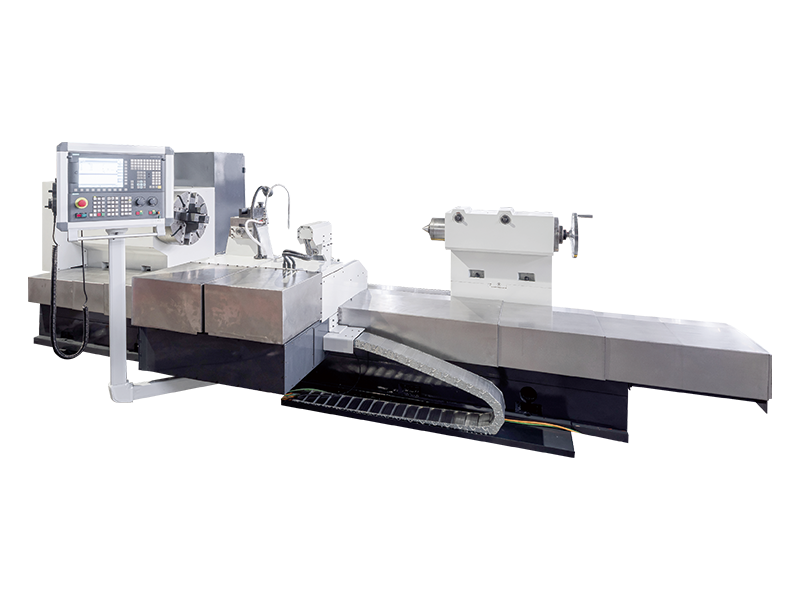
| Industry | Primary Application | Key Requirement | Typical Machine Type |
| Heavy Manufacturing | Plate bending, structural forming | High force, large radius accuracy | CNC 4-roll plate bender |
| Pipe & Tube | Forming, sizing, straightening | Roundness, wall uniformity | CNC tube straightener / mill |
| Automotive | Thread rolling, burnishing, roll forming | Surface finish, fatigue strength | CNC thread roller / roll former |
| Aerospace | Panel forming, burnishing | Traceability, tight tolerance | CNC pyramid roll / burnisher |
| Wind Energy | Tower shell forming, ring rolling | Large scale, force control | CNC ring roller / heavy plate bender |
| Construction | Roofing, cladding, structural profiles | Speed, profile consistency | CNC roll forming line |
Selecting the optimal CNC roller processing machine requires matching machine capability to the specific demands of the application. Several core factors should guide this decision:
Matching these factors correctly to available machine configurations is what separates productive, profitable installations from underperforming ones. Consulting with machine builders who specialize in your target industry is strongly recommended before finalizing specifications.
CNC roller processing machines continue to evolve with the integration of IoT connectivity, AI-assisted process optimization, and digital twin simulation. Smart machines can now self-adjust roller parameters in real time based on sensor feedback, reducing scrap and setup time dramatically. Predictive maintenance systems monitor roller bearing health and drive performance, alerting maintenance teams before failures occur and minimizing unplanned downtime.
As industrial sectors push toward leaner, more flexible manufacturing, the programmability and precision of CNC roller machines position them as long-term strategic assets. Their ability to handle a wide variety of materials and profiles within a single machine platform — enabled by CNC — makes them uniquely suited to the variable demand patterns of modern global supply chains. For manufacturers across heavy industry, automotive, aerospace, energy, and construction, investing in CNC roller processing capability is not simply an equipment decision — it is a commitment to precision-driven, scalable production for decades to come.

 Download Material

 E-mail: [email protected]
  Mob: +86-13806297906
  Tel: +86-513-85562198
  Add:No. 99 Tiantong Road, Nantong City, Jiangsu Province.
Factory scene
Copyright@ Jiangsu Dingshun Heavy duty Machine Tool Co., Ltd. All Rights Reserved.




 English
  русский
  Español
  عربى
عربى