Content
In conventional roll lathe machining, operators rely heavily on manual measurement, handwheel adjustments, and analog dial readings to control cutting depth, feed rate, and workpiece dimensions. Every one of these steps introduces a potential source of human error. Misreading a graduated dial by half a graduation mark — a difference as small as 0.02 mm — can render an entire roll workpiece out of tolerance, resulting in costly rework or outright scrap. Accumulated fatigue during long production shifts further degrades operator accuracy, as the concentration required to consistently read and respond to analog feedback diminishes over time. In industries such as paper manufacturing, steel processing, printing, and textile production, where roll surface geometry directly determines final product quality, these human-induced dimensional inconsistencies translate into field defects, customer complaints, and significant financial losses.
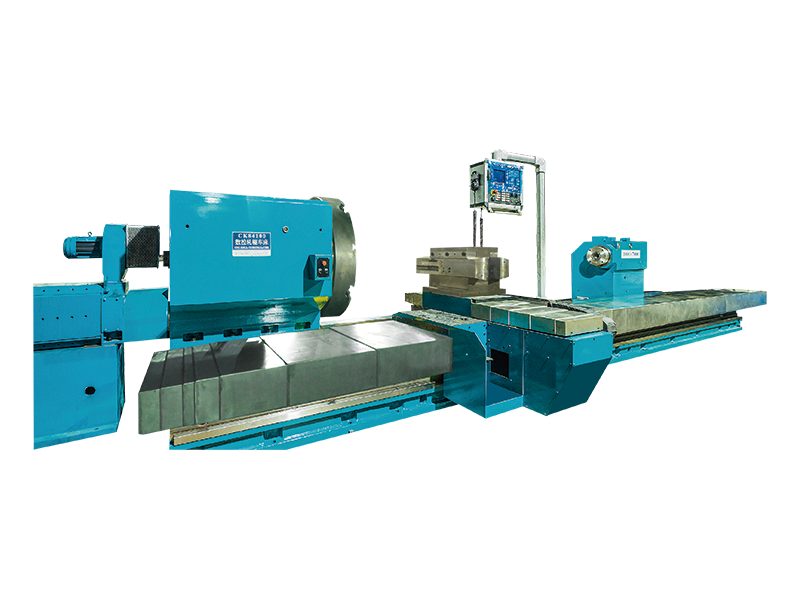
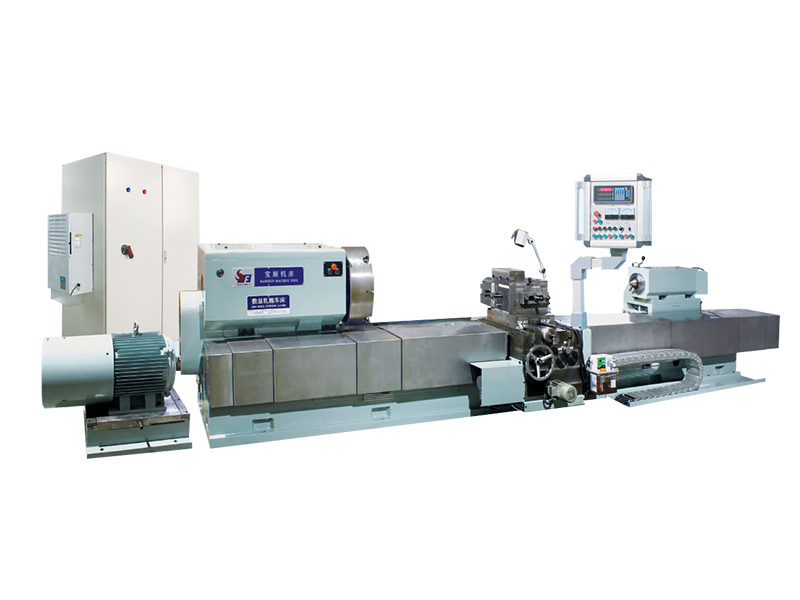
The flexible high performance digital display roll lathe was engineered specifically to address these vulnerabilities. By replacing analog dials and manual estimation with real-time digital readouts, programmable parameter storage, and automated feedback control, this class of machine fundamentally changes the operator's role from active measurement executor to process supervisor — dramatically reducing the frequency and magnitude of human errors without requiring the capital investment of a fully automated CNC machining center.
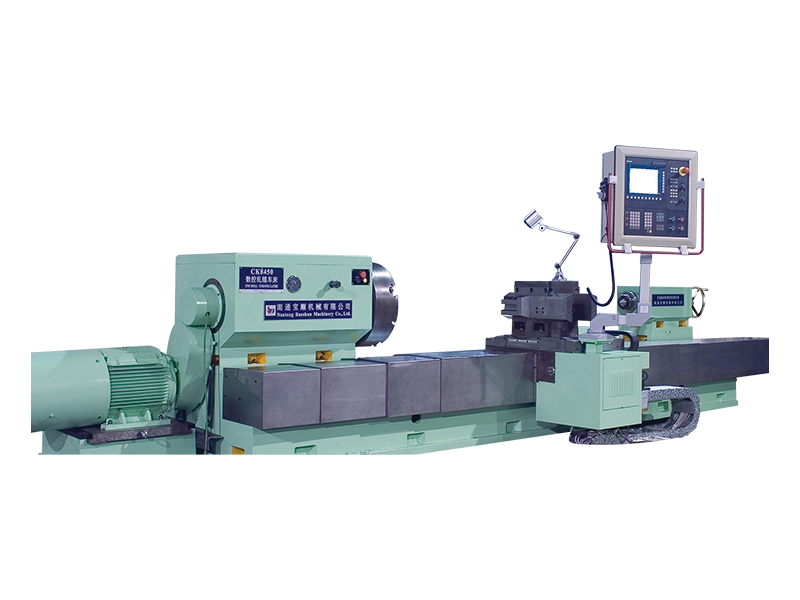
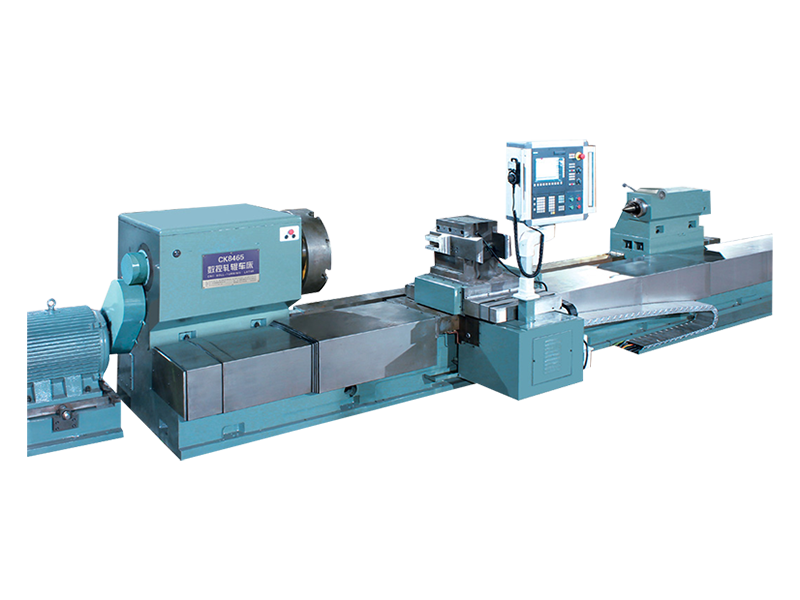
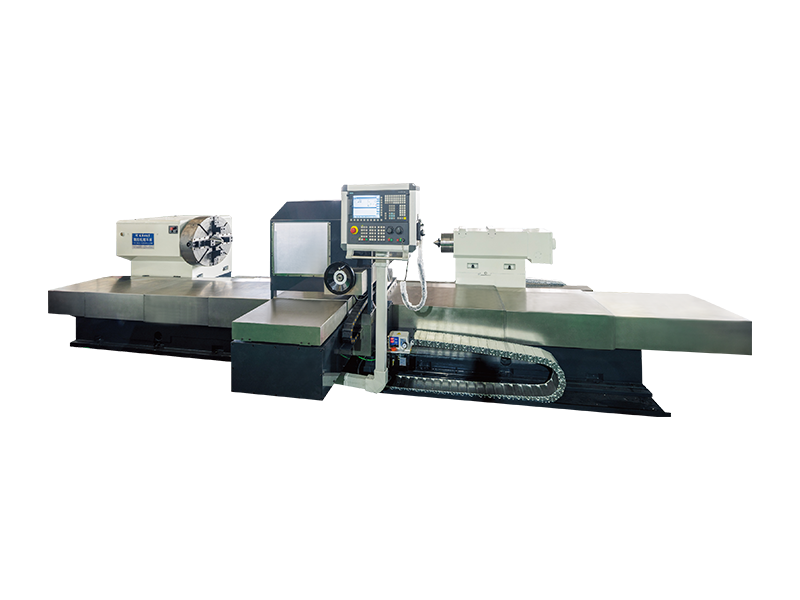
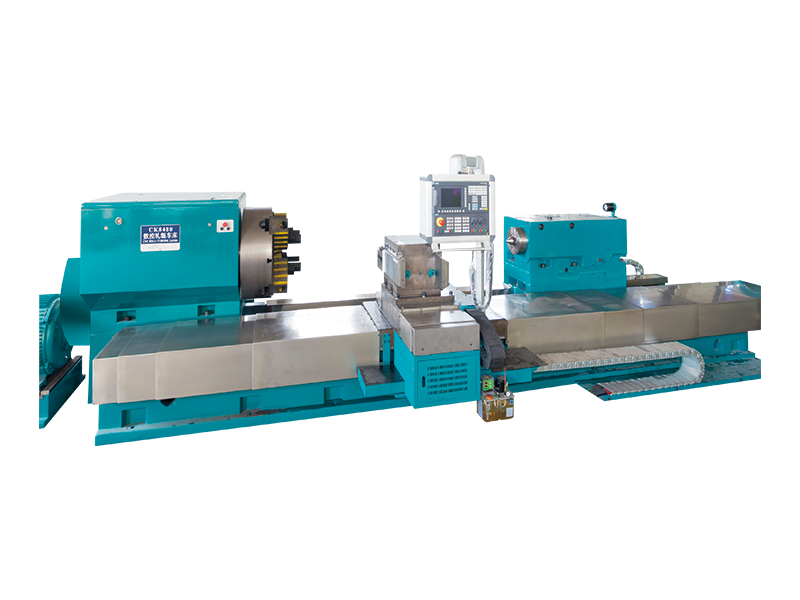
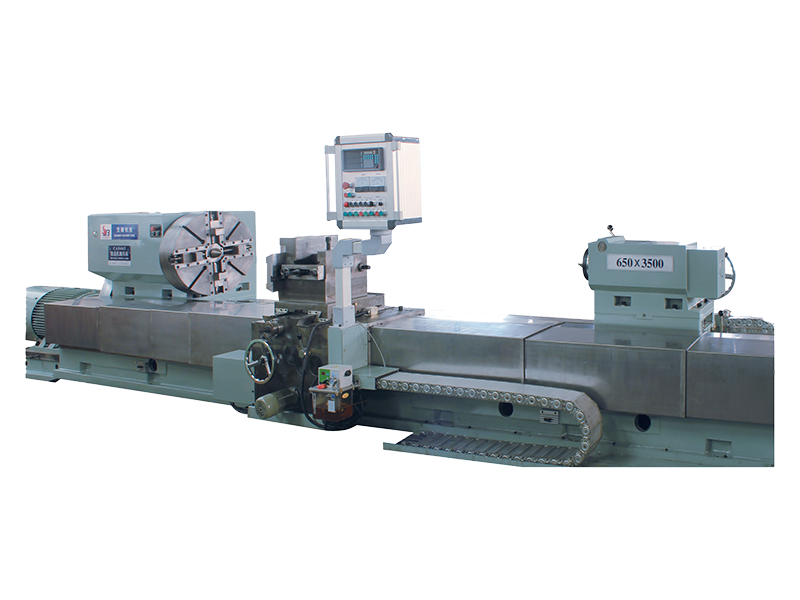
A digital display roll lathe combines the structural robustness of a heavy-duty roll turning machine with an integrated digital readout (DRO) system and, on higher-specification models, a programmable control interface that governs axis movement, spindle speed, and feed rates. The term "flexible" refers to the machine's capacity to accommodate a wide range of roll diameters, lengths, and materials — from small printing cylinders measuring 100 mm in diameter to large paper mill rolls exceeding 1,500 mm — within the same machine platform, often through adjustable tailstock positioning, interchangeable tooling systems, and variable spindle speed ranges.
"High performance" describes the combination of spindle rigidity, cutting power, thermal stability, and digital measurement precision that together allow the machine to maintain tight dimensional tolerances over long continuous cutting passes. Roll lathe operations frequently involve material removal passes of several meters in length along hardened steel, cast iron, rubber-coated, or composite roll surfaces — conditions that test both machine structural integrity and the consistency of the control system's feedback loop. High performance machines address these demands through reinforced bed construction, high-resolution linear encoders, and temperature-compensated measurement systems.
The digital readout system is the centerpiece technology through which a digital display roll lathe reduces human error. Linear encoders — either optical glass scale or magnetic strip type — are mounted along the X-axis (cross slide) and Z-axis (carriage) of the lathe. These encoders detect actual slide position with resolutions typically ranging from 0.001 mm down to 0.0001 mm on precision models, and transmit this data continuously to the DRO display panel mounted at the operator's eye level.
One of the most insidious sources of error in analog lathe operation is parallax — the apparent shift in dial pointer position when the operator's line of sight is not perfectly perpendicular to the dial face. Studies of precision machining environments have documented parallax errors of up to 0.03 mm on standard handwheel dials viewed from typical standing positions. The digital display eliminates parallax entirely by presenting an absolute numerical value that reads identically regardless of the operator's viewing angle, head height, or distance from the panel. This single change removes an error source that affects every single axis adjustment made during a production shift.
Modern DRO systems on flexible roll lathes offer both absolute and incremental positioning modes, switchable at the touch of a button. In absolute mode, all displayed coordinates are referenced to a fixed datum point — typically the roll face or a reference shoulder — established at the start of the operation. In incremental mode, the display resets to zero at any operator-defined position, showing only the distance moved from that reference point. The ability to switch between these modes without mathematical calculation prevents the accumulated arithmetic errors that occur when operators manually track multiple sequential incremental movements on analog machines, where a single addition mistake propagates through all subsequent positioning steps.
Beyond real-time position display, high-specification flexible digital display roll lathes incorporate parameter memory systems that allow complete machining programs — including target diameters at multiple positions along the roll length, feed rates, spindle speeds, and finishing pass depths — to be stored, recalled, and executed by any operator without reliance on individual skill level or experience.
This capability addresses one of the most persistent quality consistency problems in roll machining: the variation between operators. When an experienced operator sets up a roll grinding pass based on feel, habit, and personal rules of thumb developed over years, replicating that setup with a less experienced colleague introduces substantial variability. With digital parameter storage, the first operator's proven parameters become a validated program that any subsequent operator can recall and execute with identical settings, regardless of their individual experience level. The result is that part quality becomes a function of the program rather than the person — a fundamental shift in quality assurance philosophy.
Many digital display roll lathes implement a target value with audible or visual warning function. The operator enters the final target dimension for a given cut, and the DRO system monitors the live position readout against this target. As the tool approaches within a programmed proximity — for example, 0.05 mm from the final diameter — the system activates a warning indicator, alerting the operator to slow their feed rate and prepare to stop. This prevents the common error of overshooting the target diameter during inattentive or fatigued manual feeding, which on a roll lathe cannot be corrected without remounting and re-cutting from a larger diameter.
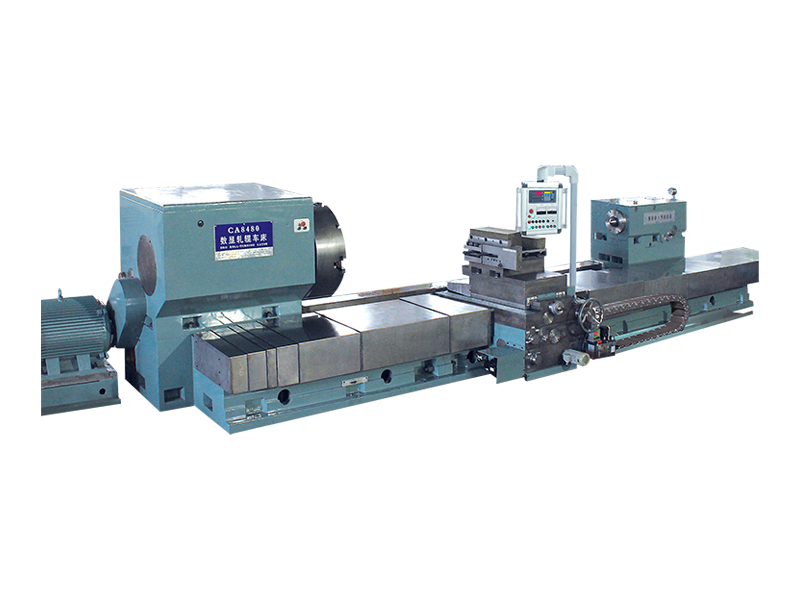
Digital display roll lathes are available in several configurations with progressively higher levels of automation and error-reduction capability. The table below compares the key features across standard, enhanced, and high-performance configurations to help buyers identify the right specification level for their production requirements.
| Feature | Standard DRO | Enhanced DRO | High Performance |
| Display Resolution | 0.001 mm | 0.001 mm | 0.0001 mm |
| Parameter Storage | None | Up to 50 programs | Unlimited (USB/network) |
| Target Warning Function | No | Audible alert | Audible + auto feed stop |
| Encoder Type | Magnetic strip | Optical glass scale | Optical + thermal compensation |
| Spindle Speed Control | Manual gearbox | Variable frequency drive | Servo-controlled with CSS |
| Data Output | None | USB export | Real-time network/MES link |
High performance digital display roll lathes equipped with servo-controlled spindle drives can implement Constant Surface Speed (CSS) — a function that automatically adjusts spindle RPM as the cutting tool moves radially inward or outward during facing operations to maintain a consistent cutting velocity at the tool tip regardless of the instantaneous workpiece diameter. On a roll lathe where the operator manually selects a fixed spindle speed, the actual cutting speed at the tool tip changes as diameter varies, causing inconsistent chip formation, surface finish variation, and unpredictable tool wear. These variations require the operator to make continuous compensating judgments — a cognitively demanding task that introduces further human error, particularly during long multi-diameter roll profiles.
CSS control removes this cognitive burden entirely by automating the spindle speed response. The operator simply enters the target surface speed in meters per minute for the workpiece material being cut, and the control system handles all RPM adjustments transparently. The outcome is consistent surface finish across the entire roll profile, predictable and repeatable tool life, and a complete elimination of surface speed-related operator adjustment errors.
Beyond the technical specifications, the practical day-to-day workflow of operating a flexible high performance digital display roll lathe is structured to minimize the cognitive load placed on the operator during repetitive production cycles. Error reduction is achieved not only through better measurement hardware but through intelligent interface design that guides operators through each step of the process.
Manufacturers who have transitioned from conventional analog roll lathes to flexible high performance digital display machines consistently report measurable reductions in dimensional rejection rates. Typical documented improvements include reductions in diameter out-of-tolerance rejections of 60 to 80 percent compared to pre-conversion baselines, reductions in surface finish nonconformances of 40 to 60 percent attributable to CSS control and consistent feed rate management, and reductions in setup-related first-piece errors of over 70 percent through guided setup sequences and stored program recall.
These improvements translate directly into reduced material scrap costs, lower rework labor hours, shorter delivery lead times, and improved customer satisfaction scores — all from a machine investment that typically costs a fraction of an equivalent full-CNC turning center. For roll machining operations where workpiece diameters, lengths, and materials vary frequently, the flexibility of the digital display roll lathe platform — quickly reprogrammable for each new roll specification without lengthy CNC program editing — provides additional productivity advantages that further strengthen the return on investment case for transitioning from traditional analog equipment.

 Download Material

 E-mail: [email protected]
  Mob: +86-13806297906
  Tel: +86-513-85562198
  Add:No. 99 Tiantong Road, Nantong City, Jiangsu Province.
Factory scene
Copyright@ Jiangsu Dingshun Heavy duty Machine Tool Co., Ltd. All Rights Reserved.




 English
  русский
  Español
  عربى
عربى