A press brake is one of the most honest machines in a fabrication shop. Put a blank between the punch and the die, push, and the metal folds. The trouble starts when the same bend has to be repeated several hundred times in a heavy gauge, on a part that takes two people to lift, with a tolerance that does not forgive a slipped backgauge. That is the point where a robotic press brake stops being a novelty and starts paying for itself.
We have spent more than two decades building machine tools for steel plants and rolling mills, so we tend to look at bending automation the way a maintenance engineer does: what does it hold, what does it repeat, and what happens at three in the morning when nobody is watching. This guide walks through how these cells are put together, where they earn their keep, and the details that decide whether an installation runs smoothly or becomes a daily source of frustration.
Content
At its core, a robotic press brake is an ordinary hydraulic or servo press brake with an industrial robot standing in front of it. The robot picks a blank from a stack or a conveyor, presents it to the tooling, holds it through the stroke, then either rotates it for the next bend or places the finished part on an outgoing stack. The press brake control and the robot control exchange signals continuously, so the machine cannot stroke until the part is properly seated and the robot cannot move until the ram is clear.
What separates a well-engineered cell from a robot bolted to a brake is everything around that handshake. Automatic tool changers pull punches and dies from a library and load them into the clamping system, so a family of parts with different bend radii can run in a single shift without anyone changing tooling by hand. Angle measurement systems, laser or contact, check the first part and feed correction back into the depth setting. Offline programming software builds the bend sequence and simulates the robot path before the first blank is ever loaded.
The result is a machine that behaves less like a press brake with an accessory and more like a small production line: blanks in, formed parts out, with the operator supervising rather than lifting.
Bending is a low-speed, high-variety operation. The ram moves for a second or two; the handling around it takes ten or twenty. That ratio is exactly why automation changes the arithmetic of a job so dramatically, and why the payback calculation has to be built on parts rather than on tonnage.
Three gains tend to show up first. Consistency is the most reliable of them: a robot presents every blank in the same position at the same angle, so the spread of finished angles across a batch narrows and scrap falls. Labour comes second. Heavy or awkward parts stop being an ergonomic problem, one operator can supervise a cell instead of standing at a machine all day, and the shortage of experienced brake operators stops dictating the shift plan. Throughput is the third, but it needs a caveat, because a robot does not bend faster than a skilled hand in every case. Its advantage appears in longer runs, in multi-bend parts where flipping and repositioning dominate, and in the fact that it does not slow down after lunch.
| Factor | Manual bending | Robotic cell |
|---|---|---|
| Angle consistency across a batch | Depends on operator skill and fatigue | Repeatable, with in-process correction |
| Practical part-weight ceiling | Limited by two-person lifting | Set by robot payload and gripper design |
| Changeover to a new part | Minutes, performed by hand | Program recall and automatic tool change |
| Labour per part | Roughly one operator per machine | One operator per cell or per shift |
| Best fit | One-offs and very small lots | Repeat families from a few dozen upward |
Payload, reach and mounting position set the practical size of the part. A floor-mounted six-axis robot is the common choice; a seventh axis or a rail extends the working envelope for long parts. The gripper deserves more engineering attention than it usually gets. Vacuum cups suit flat, clean blanks, magnets suit ferrous plate, and a double gripper that holds the incoming blank and the finished part at once can cut handling time noticeably. Whatever the choice, the gripper must hold the part rigidly enough that it does not shift during the stroke.
Automatic clamping and a tool library turn changeover from a manual job into a program step, but they only pay off if the part family actually shares a small set of tooling. A brake with a modern control, precise depth control and a fast interface to the robot matters more than raw tonnage.
A brilliant robot fed by a badly organised pallet is a slow robot. Destackers, indexing tables and simple conveyors are usually worth the money, because they let the cell run without an operator repositioning blanks every few minutes.
Offline programming lets you prove bend sequences, check for collisions, and confirm that the robot can reach every bend without trapping the part against the ram. Shops that skip simulation tend to spend their first weeks debugging in production.
Most of the robotic bending cells we see are not in job shops making one-off brackets. They sit in operations where plate is a daily input and the same families of parts come back month after month: frames, walkway panels, support structures and the formed sections that surround a rolling mill. In those plants, bending is one link in a chain that begins at the coil and ends at an assembled structure, and the same thinking behind automation and process control in rolling mills applies downstream at the brake.
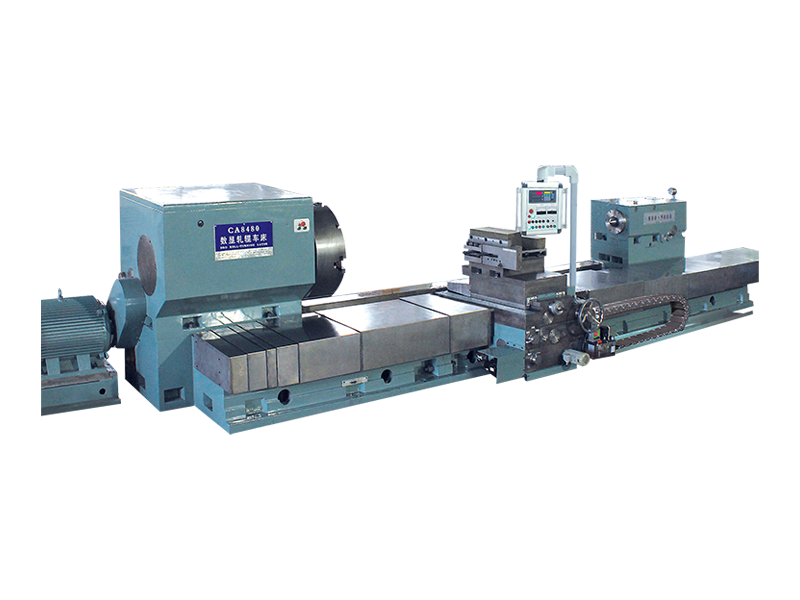
Rolls are a good illustration. The flatness and gauge of the plate that goes into a brake depend on the roll surface that produced it; a worn or poorly turned roll shows up as thickness variation and surface marks that no amount of bending skill can hide. That is why the roll shop side of the plant, with its CNC roll lathes and grinders, is part of the same quality conversation as the forming equipment.
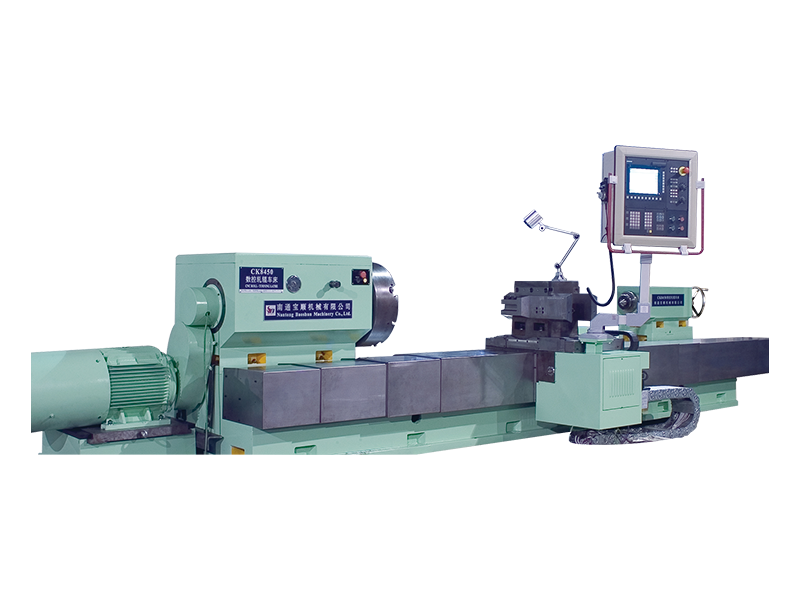
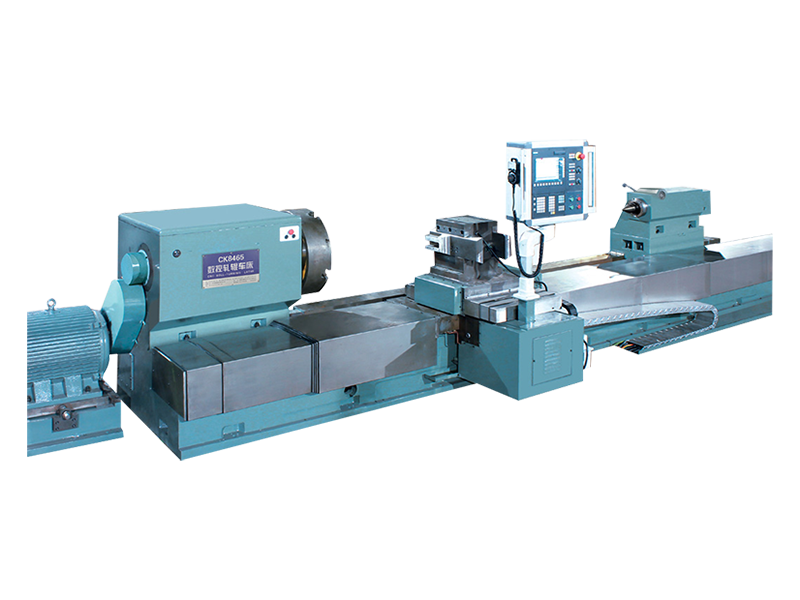
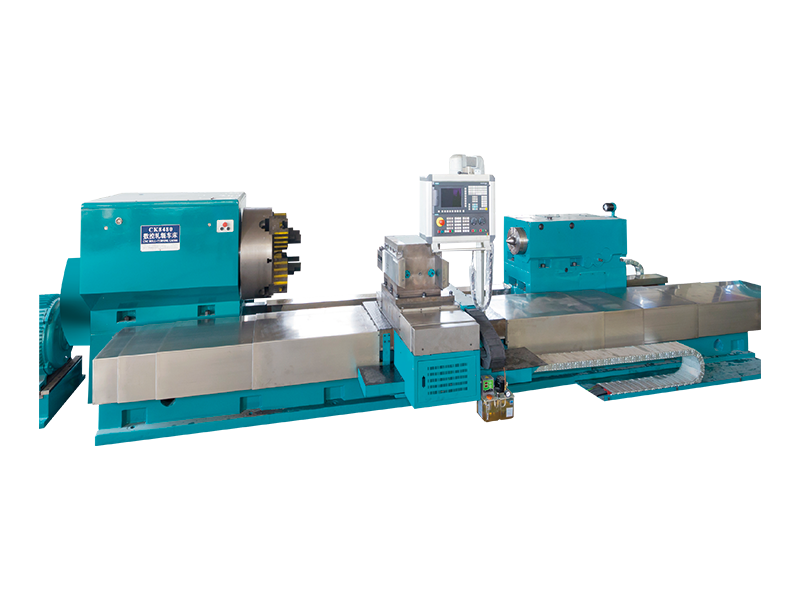
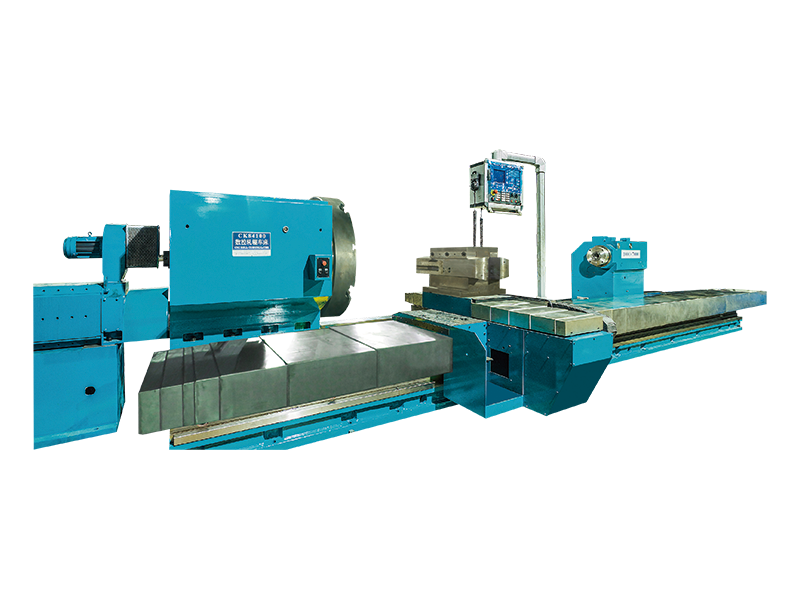
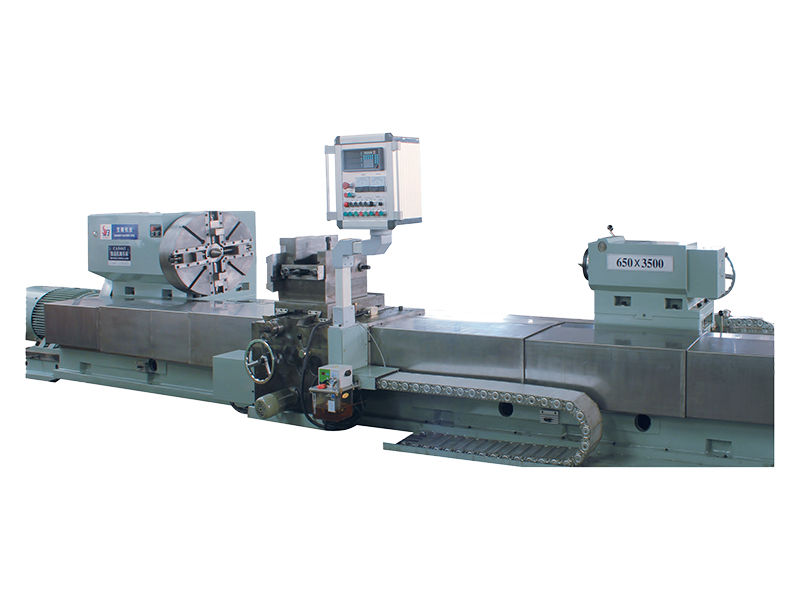
 CK8465-P Heavy Duty Precision CNC Roll LatheA heavy-duty CNC roll lathe for large roll profiles, with Ø650 mm by 3,000 mm capacity and 4,000 kg between-centers load.View Product →
A heavy-duty machine such as the CK8465-P, for example, is built to hold roll profiles and surface finish inside a predictable band on large, heavy workpieces, which is the same promise a bending cell makes to the parts it forms: the geometry you approved on the first piece is the geometry you get on the last.
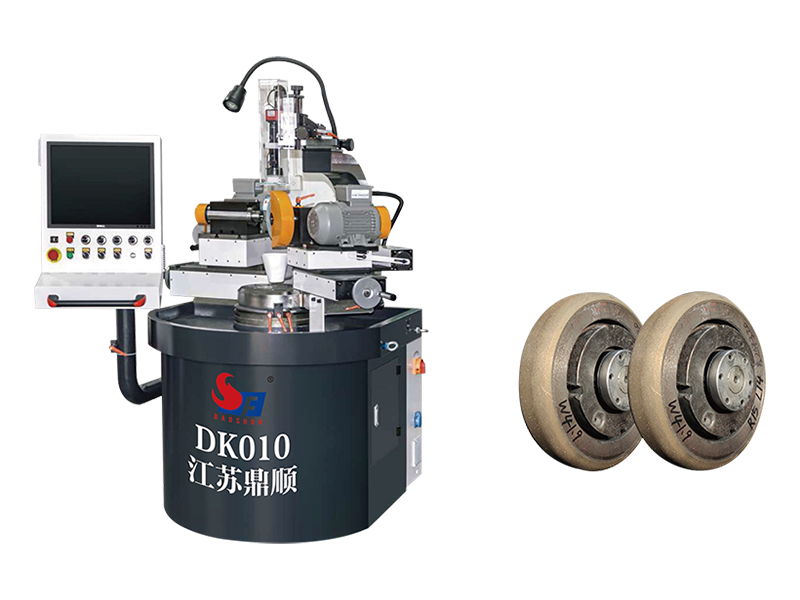
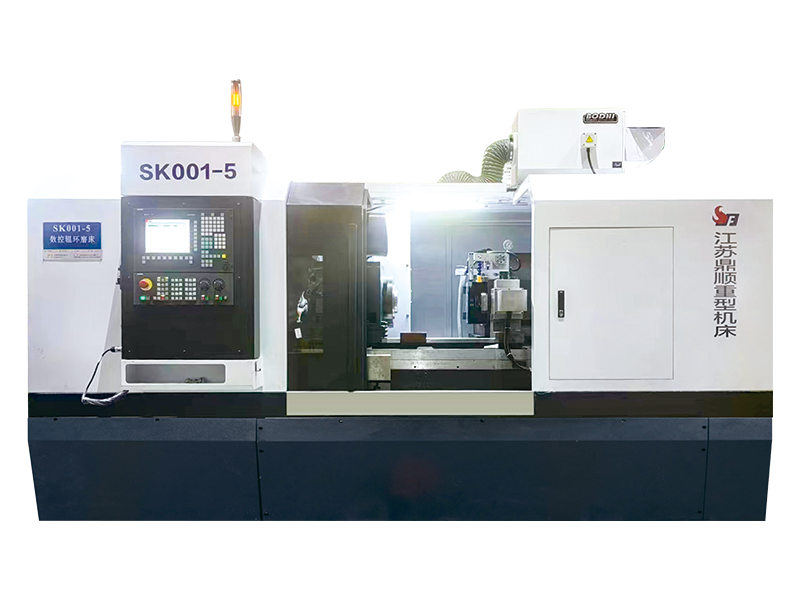 SK001-5 High Rigidity CNC Roller Ring Grinding MachineA high-rigidity CNC roller ring grinder for finishing ring-type rolls, with Ф100–Ф400 mm grinding range and Ra0.4 μm surface roughness.View Product →
For ring-type rolls and hardened work rolls, grinding is often the finishing step rather than turning, and a high-rigidity ring grinder does for the roll surface what a well-set brake does for the bend angle. None of this is bending equipment, but it is the same discipline: measure, correct, and let the machine repeat what the operator got right the first time.
A sensible specification process moves from the part backwards to the machine, not the other way round. The questions we would ask first are these:
A robotic bending cell concentrates energy in a small space: a ram closing with many tonnes of force and a robot arm carrying a heavy steel blank. A formal risk assessment is the starting point, followed by a guarding concept that separates the operator from the moving envelope without making the cell impossible to load. Light curtains with muting, interlocked access gates, mechanical retention on the gripper so a vacuum failure cannot drop a part, and checks for springback kick are all standard parts of a competent design. Where collaborative robots are used, the applicable safety standards and a documented force and speed validation belong in the file, not in a brochure.
Robotic press brakes are not a universal answer, and they are not meant to be. They are a strong answer for shops and steel plants that form the same families of heavy parts again and again, where consistency, ergonomics and predictable labour costs matter more than the flexibility of a skilled hand at the machine. Get the part flow, the gripper and the changeover strategy right, and the cell quietly does what it was bought to do, shift after shift, without asking anyone to lift a forty-kilogram blank one more time.

 Download Material

 E-mail: [email protected]
 Mob: +86-13806297906
 Tel: +86-513-85562198
 Add:No. 99 Tiantong Road, Nantong City, Jiangsu Province.
Factory scene


Copyright@ Jiangsu Dingshun Heavy duty Machine Tool Co., Ltd. All Rights Reserved.




 English
 русский
 Español
 عربى