Content
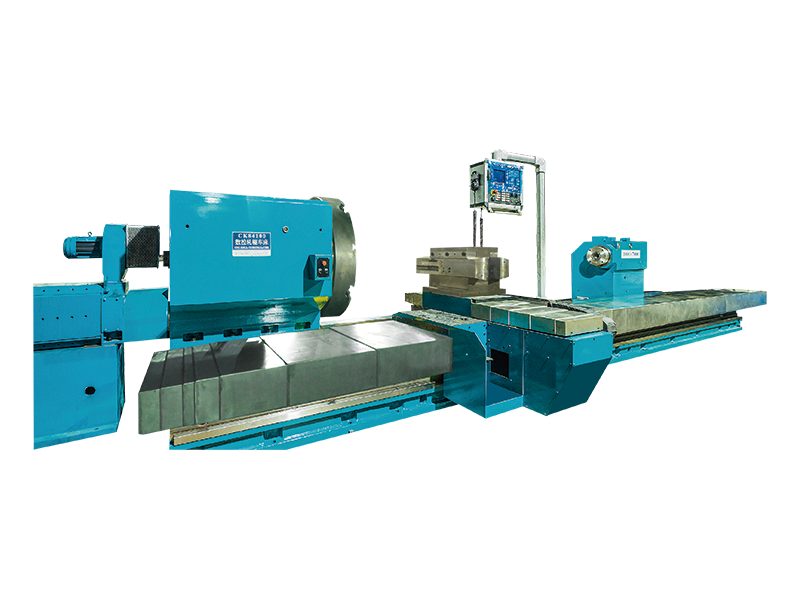
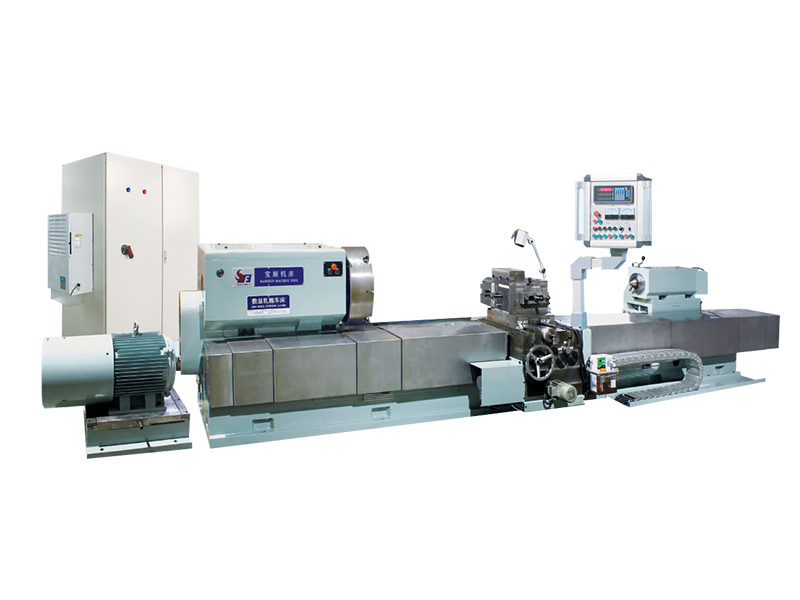
CNC machines designed for heavy industry applications differ fundamentally from their standard manufacturing counterparts in terms of structural rigidity, power capacity, thermal stability, and workpiece handling capabilities. Heavy industry encompasses sectors including aerospace component manufacturing, power generation equipment, mining machinery, shipbuilding, rail transport, and oil and gas infrastructure, where workpieces commonly exceed several tons in weight and require removal of hundreds of pounds of material during single operations. These demanding applications necessitate machines built to withstand continuous high-load cutting forces while maintaining micron-level accuracy across large working envelopes.
The structural foundation of heavy industry CNC machines typically features cast iron or welded steel construction with base thickness ranging from 8 to 24 inches depending on machine capacity. These massive bases provide the mass and rigidity necessary to absorb cutting vibrations and resist deflection under heavy loads. Machine weights for heavy industry CNCs commonly range from 50,000 to 500,000 pounds, with specialized machines exceeding one million pounds for extremely large workpiece processing. The weight-to-capacity ratio serves as a reliable indicator of machine quality, with premium manufacturers targeting ratios where machine weight equals or exceeds maximum workpiece capacity.
Positioning accuracy and repeatability specifications must account for thermal growth across large machine structures while maintaining tolerances suitable for precision component manufacturing. Heavy industry CNCs typically specify positioning accuracy of ±0.0004 to ±0.001 inches per foot of travel, with repeatability within ±0.0002 inches. These specifications become increasingly challenging to maintain as working envelopes expand, with machines featuring 20-foot or longer axes requiring sophisticated thermal compensation systems and environmentally controlled facilities to achieve consistent accuracy.
Spindle power requirements for heavy industry applications range from 40 to 200+ horsepower, with some specialized machines employing multiple spindles or interchangeable spindle heads providing different speed and torque characteristics. High-torque, low-speed spindles deliver the cutting force necessary for heavy roughing operations in difficult materials like Inconel, titanium alloys, and hardened steels, while high-speed spindles enable efficient finishing of large surface areas. Spindle taper sizes typically employ CAT 50, HSK 100, or larger interfaces capable of withstanding the cutting forces and tool weights associated with heavy machining.
Heavy industry employs several distinct categories of CNC machine tools, each optimized for specific workpiece geometries, material removal requirements, and production strategies. Understanding the capabilities and limitations of each machine type enables appropriate equipment selection for given manufacturing requirements.
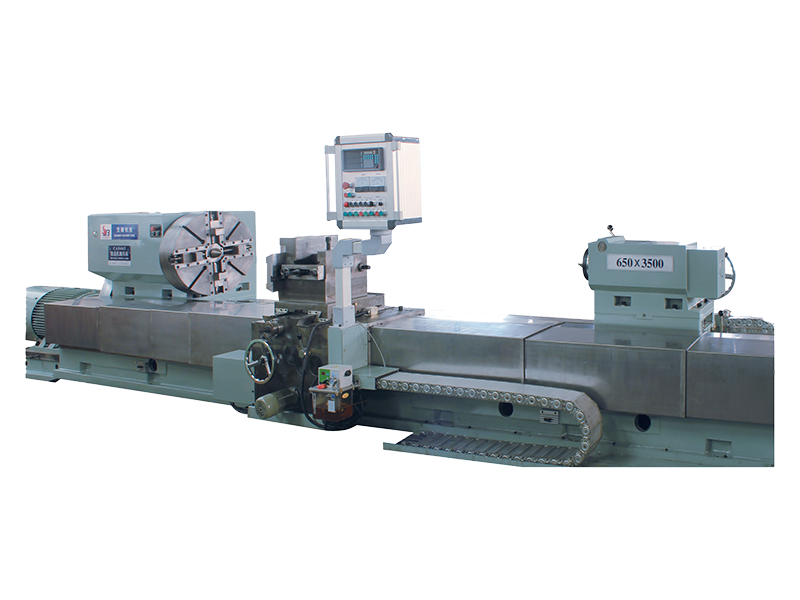
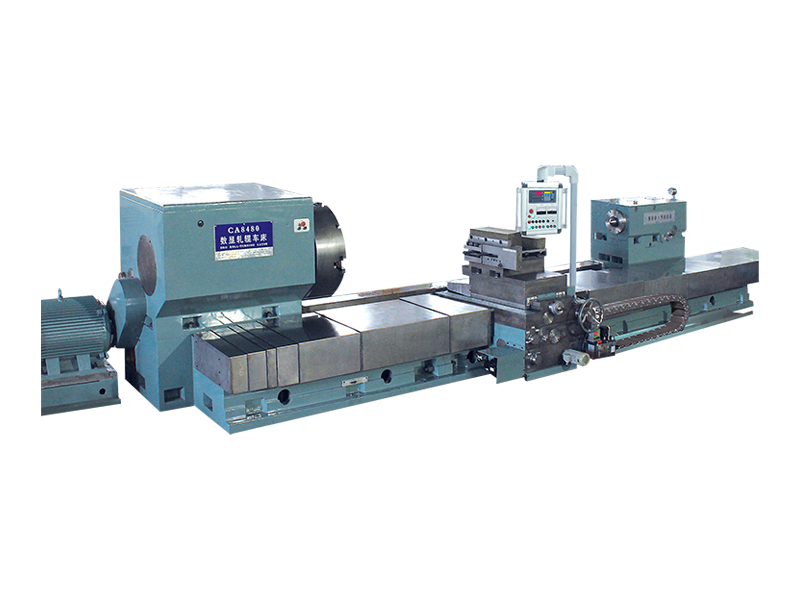
Horizontal boring mills represent the workhorse of heavy industry CNC machining, excelling at processing large, heavy workpieces requiring precision boring, facing, and milling operations. These machines feature horizontal spindle orientation with table rotation providing the fourth axis, creating excellent chip evacuation characteristics and stable cutting geometry for deep boring applications. Working envelopes commonly range from 4 to 20 feet in width and length, with spindle face-to-table distances up to 10 feet accommodating extremely large components.
The rotary table design allows complete machining of workpiece features around the full 360-degree circumference without repositioning, significantly reducing setup time and improving accuracy by eliminating datum shifts. Table capacities range from 10,000 to 200,000+ pounds, with direct-drive rotary tables providing positioning accuracy within 5 arc-seconds. Many modern horizontal boring mills incorporate automatic tool changers with capacities of 60 to 200+ tools, enabling lights-out operation for complex components requiring numerous cutting tools.
Advanced horizontal boring mills feature interchangeable spindle heads offering right-angle attachments, extended reach configurations, and high-speed spindle options. These attachments expand machine versatility, allowing operations including deep hole drilling with reach extensions of 40+ inches, five-axis contouring with universal milling heads, and high-speed finishing with dedicated spindle cartridges. The ability to change spindle configurations without workpiece removal maximizes machine utilization and reduces non-productive time.
Vertical turning centers (VTLs) excel at machining large-diameter, relatively short components including rings, flanges, brake discs, and turbine casings where horizontal lathe bed length would become impractical. The vertical orientation places workpieces on horizontal tables, utilizing gravity to aid in workholding and chip removal. Table diameters range from 40 inches to over 20 feet, with some specialized machines accommodating 30+ foot diameters for wind turbine components and large gear manufacturing.
Dual-turret configurations common in heavy industry VTLs position cutting tools on opposing sides of the workpiece, enabling simultaneous operations that reduce cycle times by 40-60% compared to single-turret machines. Each turret typically accommodates 12 to 24 tool stations, with some machines employing rotary tool holders providing milling and drilling capabilities in addition to traditional turning operations. The combination of turning, milling, and drilling in single setups eliminates secondary operations and associated tolerancing challenges from workpiece repositioning.
Live tooling integration transforms VTLs into complete machining centers capable of performing cross-drilling, slotting, and surface milling without workpiece transfer. Milling spindles mounted in turret positions deliver 20 to 40 horsepower with speeds to 6,000 RPM, sufficient for productive material removal in steel and aluminum components. This multi-tasking capability proves particularly valuable for components requiring both precision turning of bearing surfaces and complex milled features, common in heavy industrial applications.
Gantry machining centers provide the largest working envelopes among CNC machine tools, with some installations featuring work areas exceeding 100 feet in length and 30 feet in width. The gantry configuration positions the spindle carrier on a bridge structure spanning the work area, with the bridge traveling along ground-supported ways. This design distributes machine weight across foundation points surrounding the work area rather than concentrating mass under the workpiece, enabling operation in facilities with standard floor loading capacities.
Heavy industry gantry machines commonly employ dual-spindle configurations with independently controlled heads operating simultaneously on different workpiece areas or coordinating on single features requiring multiple tools. Spindle power typically ranges from 60 to 100 horsepower each, with tool weights to 250 pounds and automatic tool changers managing 80 to 150 cutting tools. The large tool magazines support extended production runs without operator intervention, critical for machining operations spanning multiple shifts.
Floor-mounted workpiece fixturing in gantry machines allows processing of extremely large, heavy components without dedicated machine tables. Manufacturers machine wind turbine nacelles, aircraft fuselage sections, large molds, and structural components directly on fixturing grids embedded in reinforced concrete floors. This approach eliminates workpiece weight limits imposed by table capacity, though it transfers responsibility for workpiece support and alignment from machine manufacturer to end user.
Planer-style CNC machining centers feature fixed gantry structures with moving tables carrying workpieces beneath stationary or vertically-moving spindle heads. This configuration provides superior rigidity compared to moving-gantry designs, as the massive bridge structure remains fixed while only the table moves longitudinally. Working envelopes typically range from 10 to 60 feet in length with widths to 20 feet, accommodating large structural components, press frames, machine tool beds, and similar heavy industrial parts.
The moving-table design concentrates machine rigidity where cutting forces apply, creating optimal conditions for heavy roughing operations in difficult materials. Table capacity commonly ranges from 100,000 to 400,000 pounds, with hydrostatic ways supporting the massive moving mass while maintaining positioning accuracy. Dual-column configurations position spindle heads on opposing sides of the work area, enabling simultaneous operations or coordinated machining of related features requiring multiple setup positions in traditional machines.
| Machine Type | Typical Work Envelope | Weight Capacity | Primary Applications | Spindle Power Range |
| Horizontal Boring Mill | 4-20 ft cube | 10,000-200,000 lbs | Precision boring, milling | 40-120 HP |
| Vertical Turning Center | 40-240 in diameter | 5,000-150,000 lbs | Large diameter turning | 60-150 HP |
| Gantry Machining Center | 20-100+ ft length | Unlimited (floor-mounted) | Very large components | 60-100 HP per head |
| Planer-Style Mill | 10-60 ft length | 100,000-400,000 lbs | Heavy structural parts | 75-200 HP |
Machine rigidity represents the single most critical factor determining heavy industry CNC performance, directly impacting achievable tolerances, surface finish quality, tool life, and material removal rates. Rigidity derives from material properties, structural geometry, joint design, and component mass distribution throughout the machine assembly. Understanding rigidity engineering principles helps manufacturers evaluate machine capabilities and optimize performance.
Static stiffness quantifies machine resistance to deflection under applied loads, measured in pounds of force required to produce 0.001-inch displacement. Heavy industry CNCs should exhibit static stiffness exceeding 100,000 pounds per 0.001 inch at the spindle nose under worst-case geometry conditions, with premium machines achieving 200,000+ pounds per 0.001 inch. This stiffness ensures cutting forces in the 5,000 to 15,000 pound range typical of heavy roughing operations produce minimal tool deflection that would compromise accuracy or increase tool wear.
Dynamic stiffness characterizes machine response to time-varying cutting forces, particularly important for interrupted cuts common in heavy industry applications. Poor dynamic stiffness manifests as chatter, surface finish degradation, and accelerated tool failure even when static stiffness appears adequate. Machine designers optimize dynamic performance through strategic mass placement, structural damping, and careful attention to joint characteristics. Cast iron construction provides superior damping compared to welded steel structures, absorbing vibration energy that would otherwise feedback into the cutting process.
Box-style column and ram constructions maximize rigidity per unit weight by creating closed-section structures resistant to bending and torsional loads. Internal ribbing patterns transfer forces to exterior walls while maintaining accessibility for maintenance and chip removal. Some manufacturers employ polymer concrete or epoxy granite filling within structural cavities, combining the damping characteristics of polymer materials with the mass and strength of mineral aggregate. These composite structures demonstrate damping coefficients 6 to 10 times higher than cast iron while maintaining equivalent stiffness.
Effective tooling strategies for heavy industry CNC machining balance aggressive material removal rates against tool life, surface finish requirements, and workpiece integrity. The large volumes of material requiring removal from heavy industry components, often measured in hundreds or thousands of pounds per workpiece, demand optimization of every aspect of the cutting process to maintain economical production.
Indexable insert tooling dominates heavy industry machining due to the combination of tool costs and replacement efficiency advantages. Insert sizes for heavy roughing typically range from 1 to 2 inches inscribed circle diameter, with some specialized applications employing 3-inch inserts for maximum material removal. These large inserts provide the edge strength and heat capacity necessary to withstand interrupted cuts and high cutting forces while maintaining dimensional stability throughout extended cut durations.
Carbide grades for heavy steel machining generally fall into the C5-C7 classification range, balancing wear resistance against the toughness required for interrupted cutting. Coated carbides extend tool life through aluminum oxide, titanium nitride, or multilayer coatings that reduce friction and diffusion wear at elevated cutting temperatures. For difficult materials including Inconel, titanium alloys, and hardened steels, ceramic inserts provide significantly higher cutting speeds than carbide, though at reduced feed rates and with greater sensitivity to shock loading.
Insert geometry selection significantly impacts chip formation, cutting forces, and surface finish. Positive rake angles reduce cutting forces by 20-30% compared to neutral geometries, beneficial when machine power limits material removal rates or when minimizing workpiece deflection in thin-walled components. Chip breaker designs control chip formation to prevent long, stringy chips that tangle in fixtures or damage finished surfaces. Heavy roughing operations typically employ aggressive chip breakers creating short, C-shaped chips that evacuate cleanly, while finishing operations use light chip breakers preserving surface quality.
Toolholder rigidity critically impacts cutting performance in heavy industry applications where tool extensions of 12 to 24 inches frequently occur to reach deep pockets or internal features. Boring bars for deep hole work may extend 40+ inches beyond toolholder support, creating cantilever beam conditions extremely sensitive to deflection. Anti-vibration boring bars incorporate tuned mass dampers that counteract vibration at critical frequencies, enabling stable cutting in otherwise impossible geometries.
Hydraulic and shrink-fit toolholders provide superior gripping force and concentricity compared to mechanical collet systems, critical for maintaining tolerance in precision boring operations. Hydraulic expansion systems apply uniform radial pressure around tool shanks through fluid pressurization, creating interference fits that resist pullout forces while maintaining balanced tool rotation. Shrink-fit holders use thermal expansion and contraction to achieve similar interference, though without adjustability once tools are installed.
Heavy-duty face mills for large-area material removal feature diameters from 6 to 16 inches with 8 to 20 cutting edges distributing cutting forces across multiple inserts. These mills require dedicated toolholders with enlarged flanges and reinforced shanks to transmit torque and resist bending moments. Modular tooling systems allow configuration changes including depth adjustment, angle modification, and insert cartridge replacement without removing holders from spindle tapers, reducing setup time and improving repeatability.
Heavy roughing operations in steel typically employ cutting speeds of 300 to 600 surface feet per minute with feed rates of 0.010 to 0.030 inches per revolution and depth of cut from 0.200 to 0.500 inches. These parameters generate metal removal rates of 10 to 50 cubic inches per minute depending on material hardness and machine power. High-pressure coolant systems delivering 200 to 1,000 PSI directly at the cutting edge improve tool life by 50-100% through enhanced chip evacuation and temperature reduction.
Adaptive control systems monitor spindle power, torque, or vibration in real-time, automatically adjusting feed rates to maintain optimal cutting conditions despite material hardness variation or tool wear progression. These systems prevent tool breakage from hard spots or interrupted cuts while maximizing material removal rates through continuous operation at machine power limits. The productivity improvements from adaptive control typically range from 15% to 40% depending on workpiece material consistency and feature complexity.
Trochoidal milling strategies optimize slot and pocket machining by creating continuous curved tool paths with controlled radial engagement rather than traditional linear paths with full-width cuts. This approach reduces cutting forces by 40-60% while enabling higher feed rates, often doubling or tripling material removal rates compared to conventional programming. The reduced cutting forces prove particularly valuable when machining thin-walled structures or reaching maximum machine table areas where spindle power exceeds structural rigidity limits.
Workholding for heavy industry CNC machining must secure massive components against substantial cutting forces while maintaining accessibility for cutting tools and preserving critical workpiece surfaces from fixture damage. The challenge intensifies as workpiece weight increases and feature tolerances tighten, requiring sophisticated fixturing approaches that balance clamping force distribution, datum stability, and setup efficiency.
Modular fixturing systems based on precision-ground grid plates provide flexible workholding for varied component geometries without custom fixture fabrication for each part number. T-slot grid plates with 4-inch or 6-inch spacing accept standard clamps, supports, and locating elements that configure into application-specific fixtures in hours rather than the weeks required for welded fixture construction. The grid plate accuracy of ±0.0002 inches per foot establishes reliable datum surfaces for precision work despite the modular approach.
Hydraulic and pneumatic clamping systems provide consistent, repeatable clamping forces essential for maintaining workpiece position during heavy cutting. Manual clamps suffer from operator-dependent tightening inconsistency and require individual attention to each clamp location, consuming significant setup time. Automated clamping actuates all clamps simultaneously with predetermined force levels, reducing setup time while improving positioning repeatability. Central hydraulic manifolds distribute pressure to multiple clamps through flexible hoses, enabling complex clamping arrangements without dedicated hydraulic circuits for each clamp.
Vacuum fixturing offers advantages for large, relatively flat components including plates, frames, and structural members where traditional clamps would interfere with machining access. High-performance vacuum systems generate 15 to 25 inches of mercury vacuum across workpiece contact areas, creating holding forces of 600 to 1,000 pounds per square foot. Porous ceramic or sintered metal vacuum surfaces conform to slightly irregular workpiece geometries while preventing leakage around edges. The absence of protruding clamps allows complete surface access for cutting tools, though vacuum fixturing proves unsuitable for operations generating upward cutting forces or for porous workpiece materials.
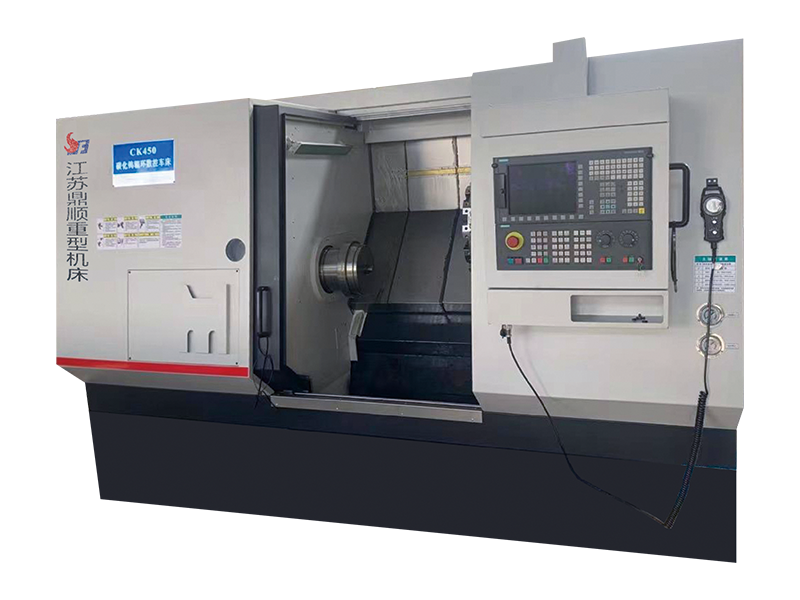
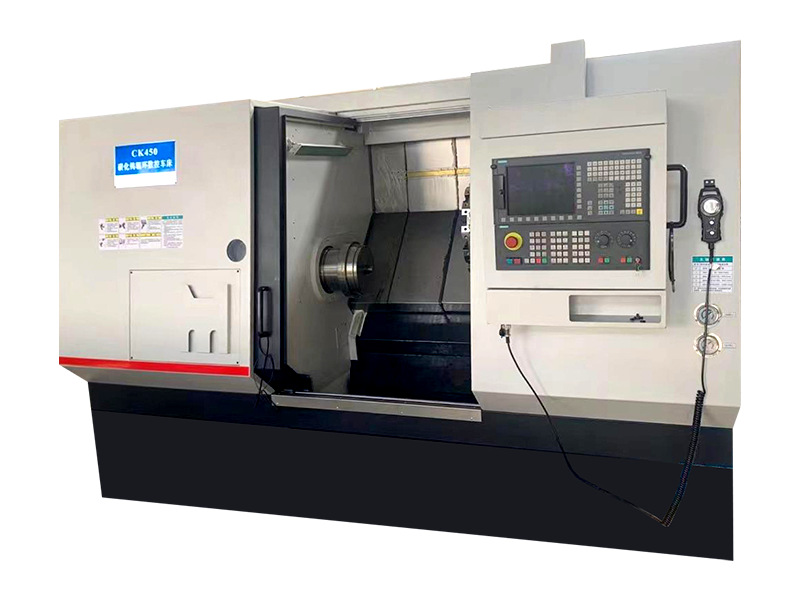
Modern CNC control systems for heavy industry machines provide sophisticated capabilities extending far beyond basic three-axis positioning, incorporating features that optimize machining performance, simplify programming, and ensure process reliability. Understanding control system capabilities influences both machine selection decisions and manufacturing process development strategies.
Look-ahead functionality analyzes upcoming tool path segments to optimize acceleration and deceleration profiles, maintaining maximum velocity through corners and curves while respecting machine dynamic limits. Advanced controllers evaluate 500 to 2,000 blocks ahead, calculating feedrate adjustments that prevent abrupt velocity changes causing surface finish degradation or dimensional errors. This capability proves particularly valuable in five-axis contouring where simultaneous motion across multiple axes creates complex dynamics requiring sophisticated velocity planning.
Thermal compensation systems address dimensional errors from machine structure expansion and contraction during warm-up cycles and throughout production shifts. Multiple temperature sensors positioned strategically throughout machine structure feed data to compensation algorithms that adjust axis positions in real-time, counteracting thermal growth. Properly implemented thermal compensation maintains tolerances within ±0.0005 inches despite temperature variations of 10°F or more across machine components. Some systems incorporate predictive algorithms that anticipate thermal behavior based on spindle load history and ambient conditions, applying compensations proactively rather than reactively.
Conversational programming interfaces simplify program creation for common features including pockets, bolt circles, and geometric patterns without requiring detailed G-code knowledge. Operators define features through graphical menus specifying dimensions, tolerances, and tool selections, with the control automatically generating optimized tool paths. This approach reduces programming time by 60-80% for straightforward components while minimizing errors from manual G-code entry. Complex components still benefit from CAM-generated programs, though conversational programming excels for repairs, modifications, and simple parts not justifying CAM investment.
In-process probing capabilities enable automated workpiece setup, feature verification, and tool offset measurement without removing parts from fixtures. Touch-trigger probes measure workpiece location and orientation, automatically updating work coordinate systems to compensate for fixturing variations. After roughing operations, probing verifies remaining material allowances before finishing passes, preventing scrap from insufficient stock removal or tool crashes from positioning errors. Tool setting probes measure assembled tool lengths and diameters, establishing offsets that account for tool assembly variation and thermal growth in spindle assemblies.
Computer-aided manufacturing software specifically designed for heavy industry applications incorporates toolpath strategies optimized for large workpieces, extended cutting tools, and machine-specific limitations. These specialized CAM systems understand horizontal boring mill kinematics, VTL dual-turret coordination, and gantry machine collision avoidance requirements that general-purpose CAM packages may handle inadequately. The software generates efficient roughing patterns that minimize air cutting and non-productive time while respecting machine acceleration limits and workpiece deflection concerns.
Post-processor development for heavy industry CNCs requires detailed knowledge of machine kinematics, control system syntax, and production-specific requirements including preferred tool approach angles and retract clearances. Custom post-processors transform generic CAM toolpaths into machine-specific G-code that optimizes axis motion, manages spindle orientation for multi-axis operations, and inserts necessary safety checks. Investment in quality post-processor development pays dividends through reduced programming time, fewer machine crashes, and improved surface finish from optimized motion control.
| Control Feature | Benefit | Typical Implementation |
| High-Speed Machining (HSM) Mode | Smooth motion, better finish | Advanced look-ahead, spline interpolation |
| Adaptive Feed Control | Maximize removal rates | Load monitoring, automatic override |
| Thermal Compensation | Maintain tight tolerances | Multi-sensor arrays, predictive algorithms |
| Collision Avoidance | Prevent crashes, reduce scrap | Solid model simulation, safe zones |
| In-Process Probing | Verify dimensions, adjust offsets | Touch-trigger probes, macro cycles |
Heavy industry encompasses diverse material types ranging from common carbon steels to exotic superalloys, each presenting unique machining challenges requiring tailored approaches. Understanding material-specific characteristics enables optimization of cutting parameters, tool selection, and process strategies for efficient, economical production.
Low-carbon steels (1018, 1020) machine readily with carbide tooling at speeds of 400-600 SFM and feed rates to 0.025 IPR, generating long, continuous chips requiring effective chip breaking and evacuation. Medium-carbon steels (1045, 4140) offer improved strength and hardness, necessitating reduced speeds of 300-450 SFM while maintaining similar feed rates. These materials respond well to aggressive roughing strategies with depths of cut to 0.500 inches, enabling rapid stock removal on heavy industry components including frames, supports, and structural members.
Heat-treated alloy steels present significantly greater machining challenges, with hardness levels from 28 to 50 HRC requiring ceramic or CBN cutting tools for economical production. Hardened steel machining employs reduced speeds of 200-400 SFM with lighter depths of cut from 0.050 to 0.150 inches, distributing cutting forces to prevent tool failure. The ability to machine hardened components eliminates heat treatment distortion concerns, enabling near-net-shape machining followed by final grinding operations only on critical surfaces.
Austenitic stainless steels including 304 and 316 work-harden rapidly during cutting, requiring positive rake angles, sharp cutting edges, and consistent feed rates to prevent work hardening ahead of the tool. Cutting speeds of 200-350 SFM with feeds of 0.008-0.020 IPR balance productivity against tool life, with high-pressure coolant essential for temperature control and chip evacuation. The material's tendency to gall and adhere to cutting edges necessitates frequent tool indexing or selection of coated carbides specifically formulated for stainless steel machining.
Martensitic and precipitation-hardening stainless steels machine similarly to medium-carbon alloy steels in annealed condition but require ceramic or CBN tooling when heat-treated to high hardness levels. Components including pump shafts, valve bodies, and turbine components fabricated from these materials benefit from rough machining in soft condition followed by heat treatment and finish machining in hardened state, optimizing both productivity and final component properties.
Inconel, Hastelloy, and similar nickel-based alloys represent the most challenging materials encountered in heavy industry machining, combining high strength at elevated temperatures with extreme work hardening and low thermal conductivity. These properties create intense cutting zone temperatures and rapid tool wear, limiting material removal rates despite high component value justifying expensive tooling solutions. Cutting speeds rarely exceed 100-200 SFM with ceramic tools or 50-80 SFM with carbide, while feed rates of 0.005-0.012 IPR represent typical practice.
Tool life in superalloy machining often measures in minutes rather than hours, making tooling costs a substantial portion of total manufacturing expense. Ceramic inserts, particularly silicon nitride and whisker-reinforced formulations, enable higher cutting speeds than carbide while maintaining adequate tool life. However, ceramic's brittleness requires rigid machine tools, stable cutting conditions, and avoidance of interrupted cuts. Polycrystalline cubic boron nitride (PCBN) tools provide excellent performance in hardened superalloys, though extreme costs of $200-$500 per insert limit applications to situations where improved productivity or surface finish justifies the investment.
Heavy industry CNC machines demand substantial facility infrastructure including foundation systems, electrical service, coolant management, and material handling equipment scaled to match machine capabilities. Proper infrastructure planning during facility design or machine installation prevents operational limitations and ensures reliable, efficient production.
Foundation requirements for heavy CNCs typically specify reinforced concrete pads 24 to 48 inches thick extending several feet beyond machine footprints in all directions. The foundation mass should equal or exceed machine weight to provide vibration isolation and prevent resonance coupling with building structures. Installation on upper floors requires structural analysis verifying adequate load capacity including dynamic loads from workpiece manipulation and cutting forces. Some manufacturers specify isolated foundations separated from building structures by expansion joints, eliminating vibration transmission to adjacent equipment or measurement systems.
Electrical service for heavy industry CNCs ranges from 200 to 800+ amperes at 480 volts three-phase, depending on spindle power, axis drive motors, and auxiliary equipment. Power quality significantly impacts control system reliability and positioning accuracy, with voltage variations exceeding ±5% potentially causing servo drive faults or positioning errors. Line conditioning equipment including isolation transformers and surge suppressors protects sensitive control electronics from utility power fluctuations and nearby equipment switching transients. Backup power systems ensure controlled shutdown during power failures, preventing workpiece damage or machine crashes from uncontrolled axis motion.
Coolant systems for heavy industry machines require capacities from 200 to 2,000+ gallons with filtration removing chips and fines to maintain cutting performance and prevent component damage. Centralized coolant systems serving multiple machines offer advantages including simplified maintenance, consistent fluid quality, and efficient chip processing through dedicated filtration and separation equipment. High-pressure coolant pumps delivering 200-1,000 PSI through the spindle or external nozzles enhance tool life and enable higher cutting parameters, though requiring specialized pumps, rotary unions, and reinforced coolant lines.
Preventive maintenance programs tailored to heavy industry CNC machines preserve accuracy, prevent unplanned downtime, and extend equipment service life. The substantial capital investment in these machines, often ranging from $500,000 to $5,000,000+ per unit, justifies comprehensive maintenance approaches that might prove excessive for less expensive equipment. Systematic maintenance scheduling balances servicing requirements against production demands, minimizing impact on manufacturing operations.
Daily maintenance activities include visual inspection of way systems for damage or contamination, verification of coolant levels and concentration, and testing of emergency stop functions. Operators check for unusual noises, vibrations, or temperature increases indicating developing problems requiring attention. Way lubrication systems receive particular attention, as inadequate lubrication accelerates wear on precision surfaces that would be expensive to repair or replace. Automatic lubrication systems should activate at programmed intervals, with operators verifying proper distribution to all required points.
Monthly maintenance typically includes thorough cleaning of machine enclosures, inspection and adjustment of way wipers and covers, and verification of hydraulic pressure levels. Ball screw backlash measurements identify developing wear requiring preload adjustment or component replacement before positioning accuracy degrades. Spindle bearing temperature monitoring detects cooling system problems or bearing wear, enabling planned bearing replacement during scheduled downtime rather than emergency repairs following failure. Control system error logs review identifies recurring alarms indicating developing component failures or programming issues requiring correction.
Annual or semi-annual major maintenance includes complete machine geometry verification using laser interferometry or ballbar testing, identifying deviations from original accuracy specifications. Precision leveling checks ensure machine installation remains stable despite foundation settling or thermal cycling. Spindle runout measurement verifies bearing condition and taper cleanliness, with excessive runout indicating need for bearing service or spindle replacement. Hydraulic and pneumatic systems undergo thorough inspection including seal replacement, filter changes, and pressure adjustment verification.
Predictive maintenance technologies including vibration analysis, oil analysis, and thermal imaging identify developing problems before they cause failures. Vibration monitoring on spindle bearings detects wear progression, enabling planned replacement during scheduled downtime rather than catastrophic failure during production. Oil analysis from hydraulic systems reveals contamination levels, additive depletion, and wear particle generation indicating component degradation. Thermal imaging identifies abnormal heating patterns suggesting electrical connection problems, bearing wear, or cooling system deficiencies.
Justifying heavy industry CNC machine acquisitions requires comprehensive analysis of productivity improvements, quality enhancements, and capacity expansion benefits relative to substantial capital investments. These machines typically cost $500,000 to over $5,000,000, demanding clear demonstration of value creation through increased throughput, reduced labor costs, improved quality, or expanded capability enabling new business opportunities.
Productivity analysis compares machining time on proposed equipment against current methods, accounting for setup time reductions, increased material removal rates, and multi-operation consolidation. A horizontal boring mill replacing a combination of manual operations and smaller CNC equipment might reduce total cycle time by 40-60% while eliminating multiple setups and associated handling. The time savings translate directly to increased capacity, either enabling higher production volumes from existing labor or freeing resources for additional work. Annual labor savings from a single machine frequently exceed $100,000 in facilities with multiple-shift operation.
Quality improvements from heavy industry CNC machines reduce scrap rates, rework expenses, and warranty costs while potentially enabling premium pricing for superior products. Eliminating multiple setups removes tolerance stack-up concerns, improving geometric relationships between features machined in single operations. In-process probing and adaptive control reduce variation from operator skill differences and material inconsistency. These quality enhancements prove difficult to quantify precisely but contribute substantially to total value realization.
Capability expansion enabling new market entry or displacement of purchased components represents potentially the highest-value justification for heavy industry CNCs. A manufacturer previously outsourcing large component machining gains vertical integration benefits including reduced lead times, improved intellectual property protection, and margin capture on operations previously performed by suppliers. The ability to quote new projects requiring capabilities unavailable in existing equipment expands addressable market opportunities, potentially generating revenue streams far exceeding initial machine costs.
Financial analysis typically employs payback period, net present value, or internal rate of return calculations incorporating all cost factors including purchase price, installation, training, maintenance, and operating expenses. Payback periods for heavy industry CNCs commonly range from 2 to 5 years depending on utilization rates and value proposition specifics. Financing options including capital leases, operating leases, or manufacturer-subsidized programs affect cash flow timing and total ownership costs, influencing acquisition decisions and justification metrics.

 Download Material

 E-mail: [email protected]
  Mob: +86-13806297906
  Tel: +86-513-85562198
  Add:No. 99 Tiantong Road, Nantong City, Jiangsu Province.
Factory scene
Copyright@ Jiangsu Dingshun Heavy duty Machine Tool Co., Ltd. All Rights Reserved.




 English
  русский
  Español
  عربى
عربى