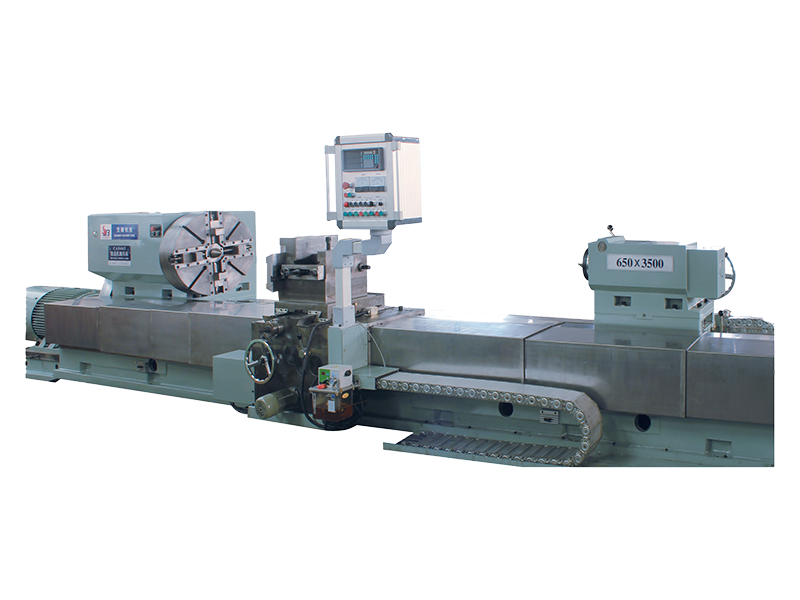
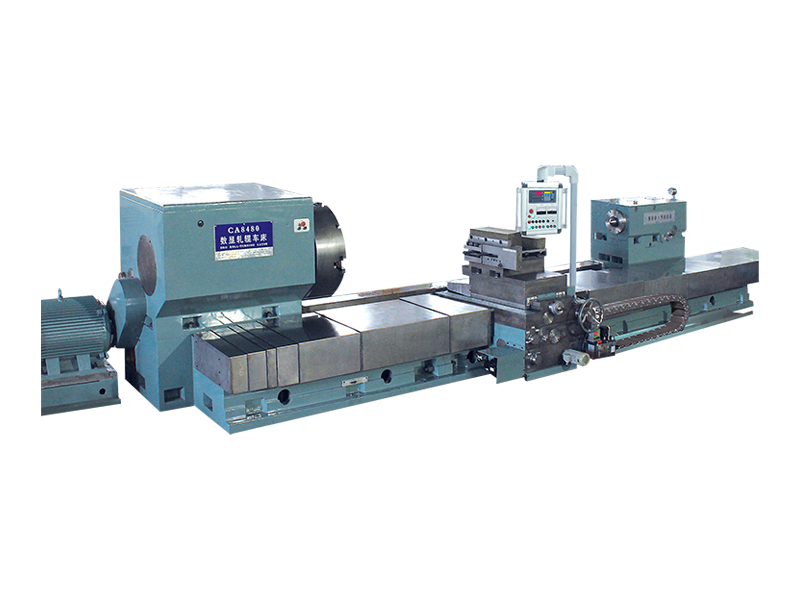
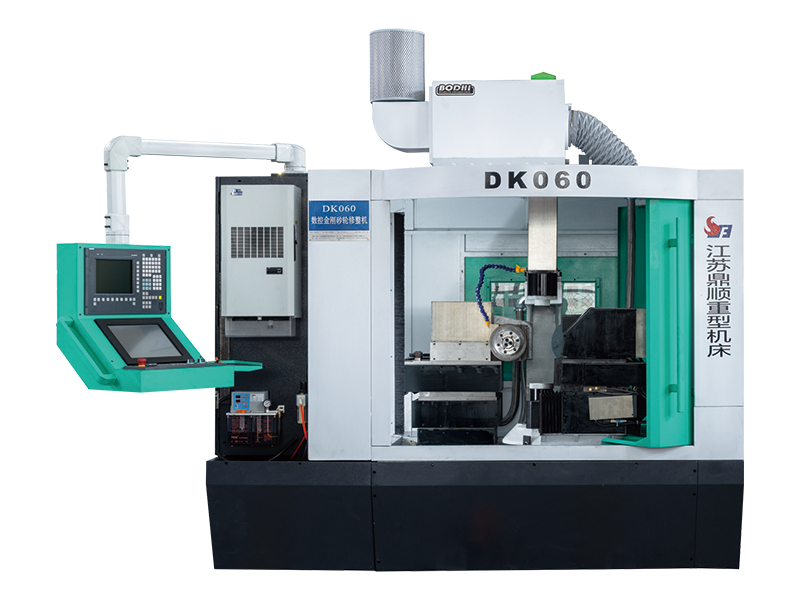
Selecting the right digital diamond wheel dressing machine is one of the most consequential decisions in precision grinding operations. The wrong choice can lead to inconsistent wheel profiles, excessive diamond wear, poor surface finishes, and costly downtime. With the market offering a wide range of machines—from entry-level CNC dressers to fully automated high-precision systems—understanding what truly matters before making a purchase is essential. This guide walks you through every critical factor so you can make a confident, informed decision.
Content
A digital diamond wheel dressing machine is a precision piece of equipment used to restore, true, or profile grinding wheels using diamond dressing tools. Unlike conventional manual dressers, digital versions integrate CNC controls, servo motors, and programmable interfaces to deliver highly repeatable, accurate dressing operations. They are widely used in industries such as automotive manufacturing, aerospace, toolmaking, bearing production, and precision optics—anywhere that grinding wheel geometry directly impacts the quality of the finished part.
The "digital" element refers to the machine's ability to control dressing parameters—feed rate, depth of cut, traverse speed, and profile geometry—through a numerical or software-based interface. This eliminates guesswork and human variability, making the dressing process measurable, traceable, and consistent across production runs.
Before evaluating any machine specifications, you must clearly define what you are dressing and why. A machine that performs flawlessly for cylindrical wheel dressing in an automotive plant may be entirely inadequate for profile dressing complex contours in a tool and cutter grinding environment.
Consider the diameter, width, and bonding type of the wheels you intend to dress. Vitrified bond wheels, resin bond wheels, and superabrasive CBN or diamond wheels each respond differently to dressing parameters. Ensure the machine's spindle speed range and dressing tool feed capabilities match the specific wheel type and size you work with most frequently.
Simple flat or angled profiles require far less from a dressing machine than complex contoured forms. If your grinding operations involve intricate radii, undercuts, or multi-axis profiles, you will need a machine with 2-axis or multi-axis interpolation, high-resolution encoders, and robust CAD/CAM profile input capabilities. Choosing a machine with insufficient axis control for your profiles is a common and expensive mistake.
In diamond wheel dressing, precision is not just a feature—it is the entire purpose. When comparing machines, pay close attention to the following numerical specifications rather than relying on vague marketing claims.
The control system is the brain of the machine and deserves thorough evaluation. A powerful, user-friendly digital control can dramatically reduce setup time, minimize operator error, and enable more complex dressing operations without specialized programming knowledge.
Look for machines equipped with well-known, well-supported CNC platforms such as Siemens, Fanuc, or Mitsubishi. These controllers offer proven reliability, extensive technical support networks, and compatibility with industry-standard G-code programming. Proprietary controllers from lesser-known brands may offer lower upfront costs but can create significant long-term support and integration challenges.
High-end digital dressing machines allow you to import complex wheel profiles directly from CAD files (DXF or IGES formats), automatically converting geometry into dressing tool paths. This is invaluable for reducing setup time and ensuring profile accuracy. Machines that only support manual point-to-point programming are time-consuming and prone to input errors when handling complex profiles.
For quality-critical industries such as aerospace or medical device manufacturing, the ability to log dressing parameters—timestamps, feed rates, depth of cut, and tool compensation values—provides an essential quality audit trail. Ensure the control system supports data export to USB, Ethernet, or your facility's MES/ERP system if traceability is a requirement.
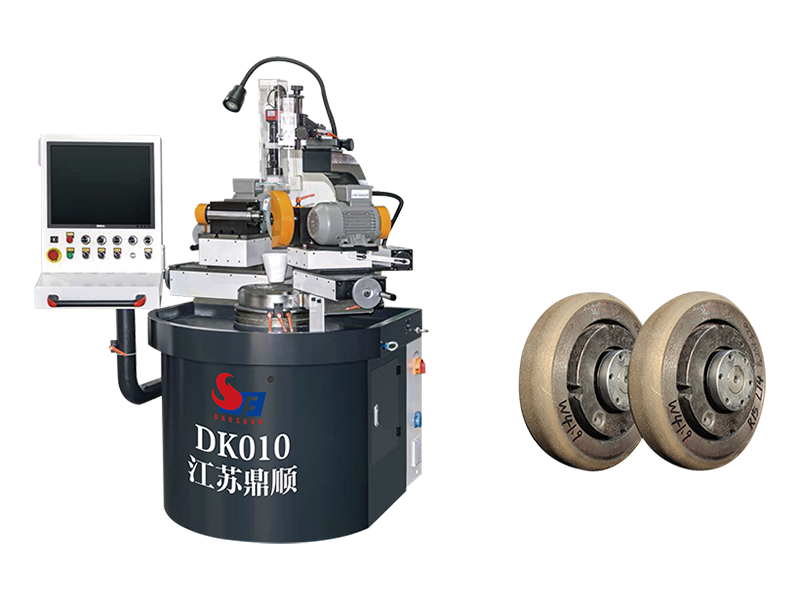
Digital precision means nothing if the machine's physical structure cannot maintain that precision under dressing loads. Vibration, thermal expansion, and structural deflection are the enemies of accurate wheel dressing. Evaluate the following structural attributes carefully.
The machine must be compatible with the types of diamond dressing tools your process requires. Different operations call for different tool types, and not all machines accommodate all options equally well.
| Dressing Tool Type | Best For | Key Requirement |
| Single-point diamond | Simple profiles, truing | Precise Z-axis control |
| Rotary diamond roll | High-volume production, complex forms | Synchronised spindle speed ratio control |
| Multi-point diamond block | General truing and conditioning | Consistent traverse feed rate |
| Radius / profile dresser | Curved and contoured wheel faces | 2-axis interpolation, high resolution |
Verify that the machine's spindle interface, tool holder system, and axis travel ranges accommodate the specific dressing tools your current and future applications demand. Retrofitting a machine for a different tool type is often impractical and costly.
A digital diamond wheel dressing machine rarely operates in isolation. Consider how the machine will integrate—physically and digitally—with your existing grinding machines and production workflow.
Some dressing machines are designed as standalone units, while others are built to mount directly onto or beside specific grinding machine brands. Inline or integrated dressing systems offer the advantage of dressing the wheel in-situ without removing it from the grinder, preserving setup accuracy and eliminating re-mounting errors. If your grinding volumes are high and downtime for wheel changes is costly, an integrated dressing solution is worth the additional investment.
Also evaluate the machine's communication interfaces. Compatibility with your facility's network, Industry 4.0 architecture, or specific grinding machine control (via analog, RS232, Ethernet/IP, or PROFIBUS) can streamline automated dressing cycles and reduce manual intervention significantly.
Even the most precisely engineered machine will eventually require maintenance, calibration, or repair. The availability and quality of after-sales support is frequently underestimated during the buying process—until something goes wrong.
It is tempting to evaluate digital diamond wheel dressing machines purely on purchase price, but this approach consistently leads to poor decisions. A lower-priced machine with higher diamond consumption rates, more frequent calibration requirements, or limited software upgrade paths may cost significantly more over a five-year horizon than a premium machine with a higher upfront price.
Calculate total cost of ownership by factoring in expected dressing tool consumption, energy consumption, maintenance labor costs, software licensing or upgrade fees, and the cost of any unplanned downtime due to machine failures. Request case studies or reference customers from the manufacturer who can provide real-world operating cost data rather than relying solely on specification sheets.
Choosing the right digital diamond wheel dressing machine is ultimately about aligning machine capabilities with your specific process requirements, quality standards, and production goals—not simply finding the most feature-rich or least expensive option. By systematically evaluating precision, control systems, structural integrity, tool compatibility, integration potential, and total ownership costs, you will be well-positioned to select a machine that delivers measurable value for years to come.

 Download Material

 E-mail: [email protected]
  Mob: +86-13806297906
  Tel: +86-513-85562198
  Add:No. 99 Tiantong Road, Nantong City, Jiangsu Province.
Factory scene
Copyright@ Jiangsu Dingshun Heavy duty Machine Tool Co., Ltd. All Rights Reserved.




 English
  русский
  Español
  عربى
عربى