Robotic welding has come a long way from the fixed, high-volume cells that made their name in automotive plants. In structural steel fabrication the economics are different: batch sizes are smaller, sections are heavier, joints run deeper, and the same cell may be asked to run a column splice on Monday and a stiffened gusset assembly on Friday. That is the reality of robotic welding systems for complex structural steel, and it rewards a different kind of planning.
We have spent more than twenty years building heavy machine tools for steel plants and the shops that serve them, and the pattern is remarkably consistent. The robot is rarely the limiting factor. What decides whether a cell earns its keep is everything around the torch: how the parts arrive at the fixture, how they are held, how much the joint moves as it fills, and how accurately the mating surfaces were machined before anyone struck an arc.
Content
Thin, clean, identical parts are what robots dream about. Structural steel is the opposite, and it helps to be honest about why before specifying hardware.
Most structural cells follow one of a handful of layouts. Choosing the right one is more about the parts you actually run than about the robot's payload or reach.
| Configuration | Typical work | Strength | Watch out for |
|---|---|---|---|
| Fixed table with six-axis robot | Stiffeners, base plates, small gussets | Simple, quick to fixture, low cost | Underside access is limited |
| Single-axis positioner (trunnion) | Beam-to-column connections | Turns the joint to flat or horizontal | Counterweight and floor space |
| Dual-station turntable | Mixed small and medium assemblies | Load and unload while welding continues | Fixtures must be duplicated |
| Head-and-tailstock rotator | Cylindrical and tubular weldments | Continuous circumferential welding | Run-out of the machined rings |
| Gantry or floor rail | Very large girders and frames | Reach without moving the workpiece | Rail alignment and calibration |
In practice, a fabricator with a genuine mix of work usually ends up with one flexible station and one dedicated station, rather than trying to make a single cell do everything well.
Ask an experienced welding engineer where automation projects fail, and the answer is almost never the robot. It is the joint preparation. A robotic system needs the bevel angle, root face and root gap to sit within a window that the process can tolerate, and that window is far narrower than a manual welder's patience.
That puts real weight on the upstream operations: cutting, bevel machining, edge preparation and the accuracy of the mating faces. Where heavy plate is prepared on a CNC machine rather than thermally cut and ground by hand, root faces stay consistent, root gaps tighten, and the welding procedure can be locked down instead of continually adjusted.
The same logic applies to the machined pads, end faces and bores that locate one member against another. If those surfaces are out by a millimetre, no amount of seam tracking will recover the joint geometry — the robot simply follows the error faithfully and consistently.
It is easy to overlook the mechanical side of a welding cell, because it looks like simple steel fabrication. It is not. On a head-and-tailstock rotator, the run-out of the trunnion rings and the concentricity of the drive rollers directly affect arc length. A ring that wanders half a millimetre will show up in the weld profile on every revolution, even when the robot is perfect.
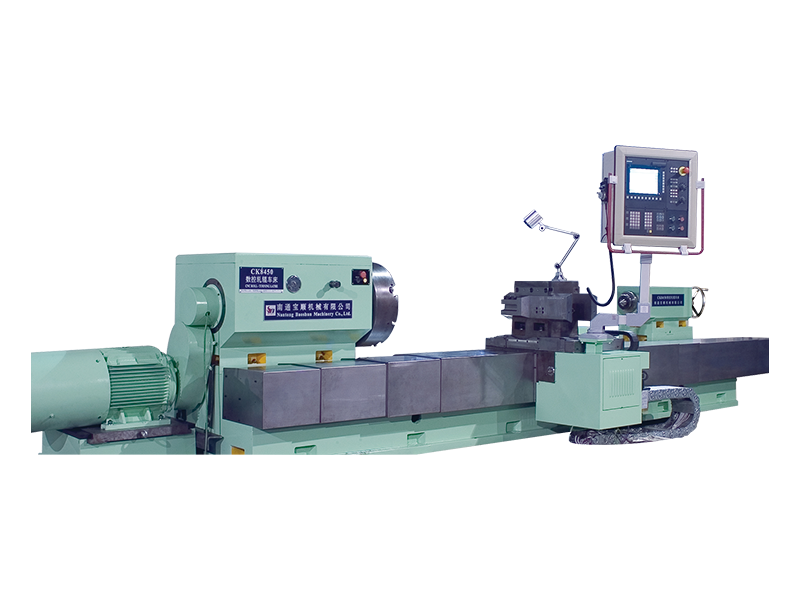
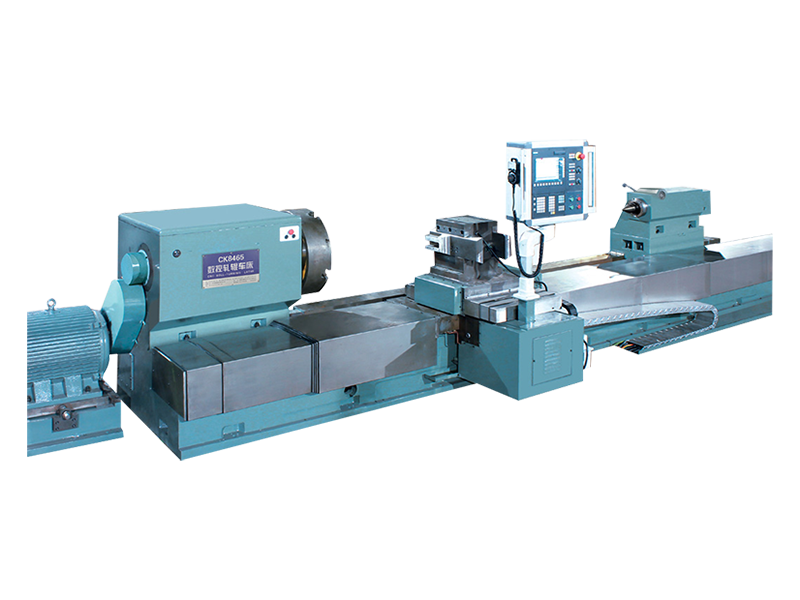
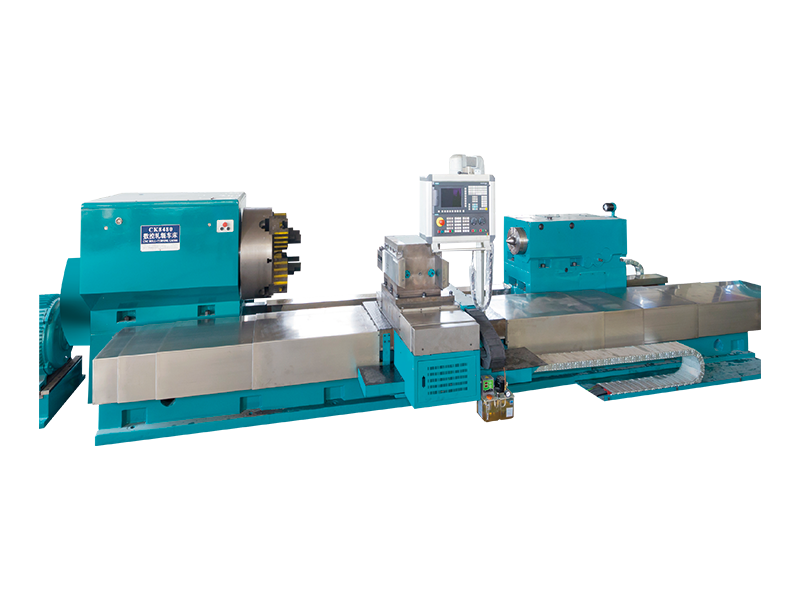
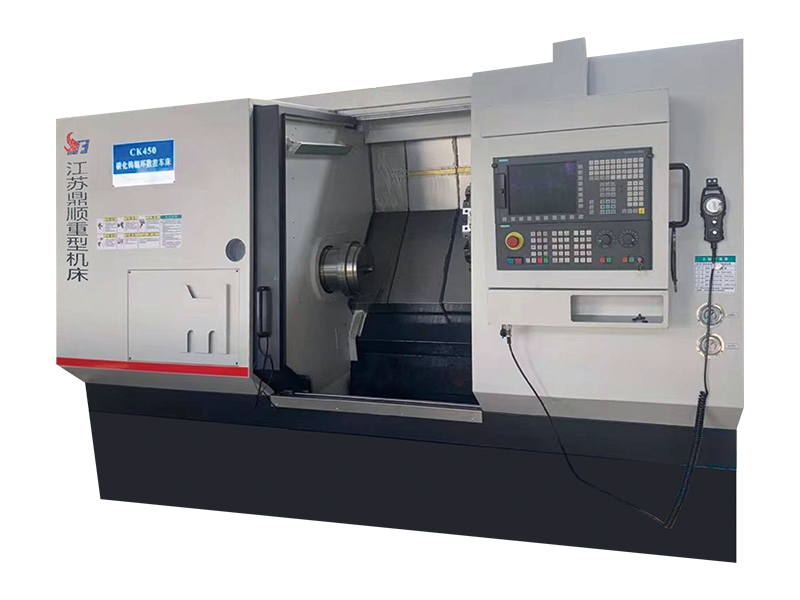
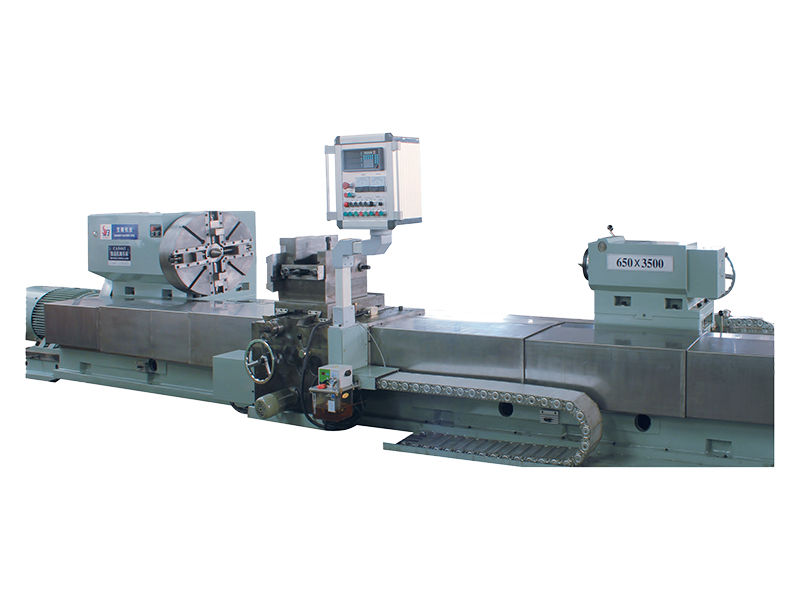
This is why we still spend so much of our time on heavy turning. The rollers, rings and shafts that carry a weldment through a cell are large, heavy, and need to hold diameter and surface finish over long production runs. For workshops that machine these components themselves, heavy-duty CNC roll lathes for accurate diameter and surface finishing are the usual starting point.
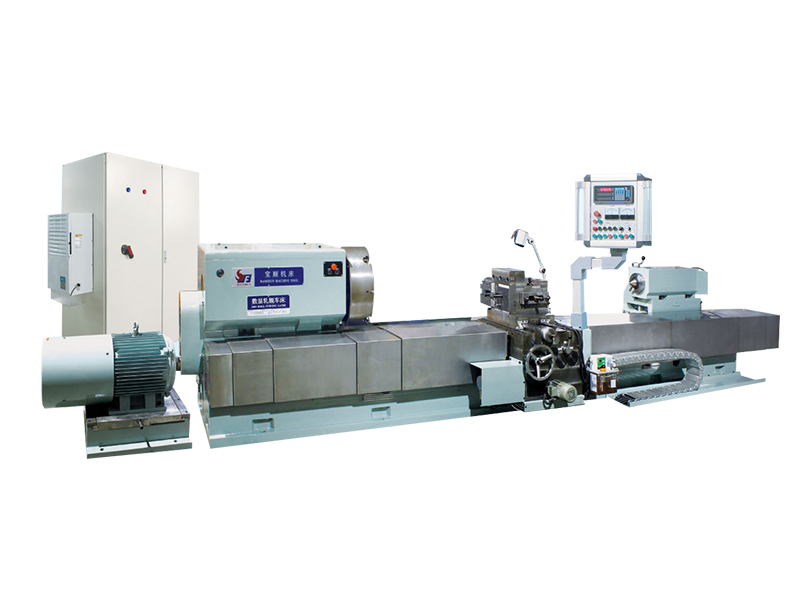
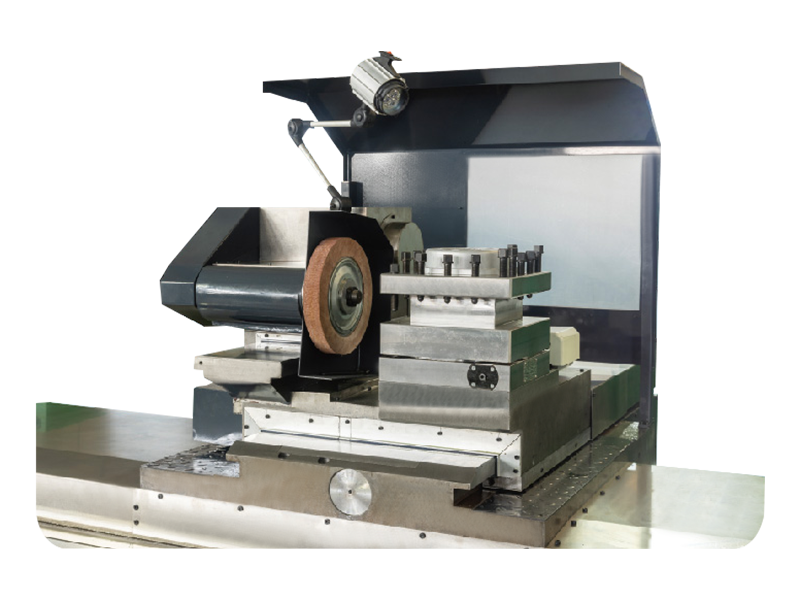 Heavy-Duty Precision CNC Roll-and-Toss Integrated LatheFor workshops machining large rollers, rings and shafts, this heavy-duty lathe offers Ø650 mm swing, 3000 mm length and 4000 kg between-centers capacity for accurate finishing.View Product →
A machine of this class gives a shop the swing and stiffness to turn large cylindrical parts without chatter at the finishing pass — which is precisely the difference between a rotator that runs true and one that keeps operators chasing weld appearance all shift.
Programming a structural cell is mostly a data problem. Offline programming from a 3D model is standard practice, but the model has to reflect what fabrication actually produces, not what the drawing promised. Build the tolerance allowance in from the start and the first weld on a new assembly is far more likely to be a keeper.
Sensing then covers what planning cannot. Laser seam tracking handles lateral drift along a long run. Through-arc sensing suits deep, narrow preparations where a laser struggles. Touch sensing is still the most reliable way to find a plate edge before a fillet. Used together, they let a cell absorb a realistic amount of part variation without a programmer standing at the pendant.
Thick-section welding generates a lot of heat in a small area, and the material does what physics demands. The practical answer is to design the sequence and the restraint together rather than to correct afterwards.
| Problem | Typical symptom | Practical remedy |
|---|---|---|
| Angular distortion | Flange pulls out of square after multipass | Balanced pass sequence and back-step welding |
| Longitudinal shrinkage | Assembly shortens against datum | Pre-set the fixture and allow for contraction |
| Root gap drift | Gap opens or closes during the pass | Tack plan, strongbacks, machined root faces |
| Rotator run-out | Uneven cap profile around a circumference | Inspect and re-machine rings and rollers |
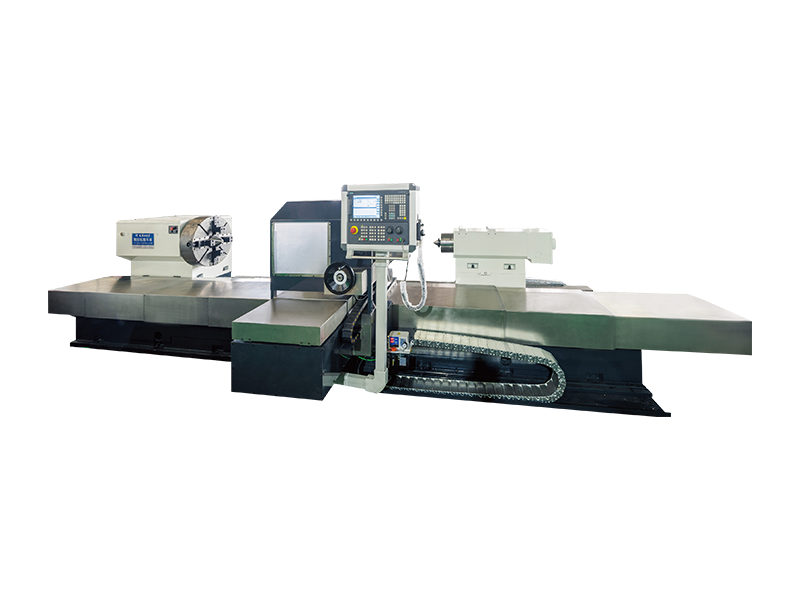
Many complex structural assemblies are not finished when the last pass cools. Fabricated drums, bearing housings, trunnions and large cylindrical frames still need their end faces, bores and mounting surfaces brought to final size, and doing that after welding is often the only way to guarantee concentricity in a part that has already moved.
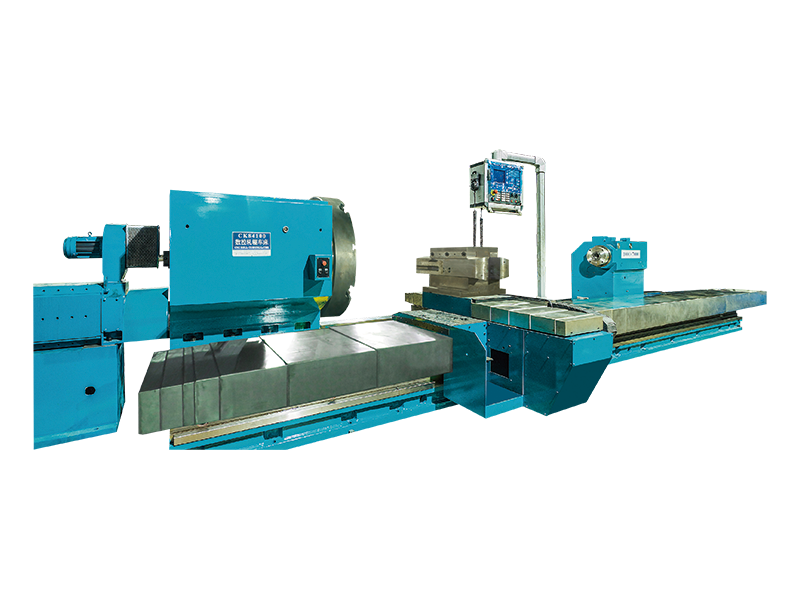
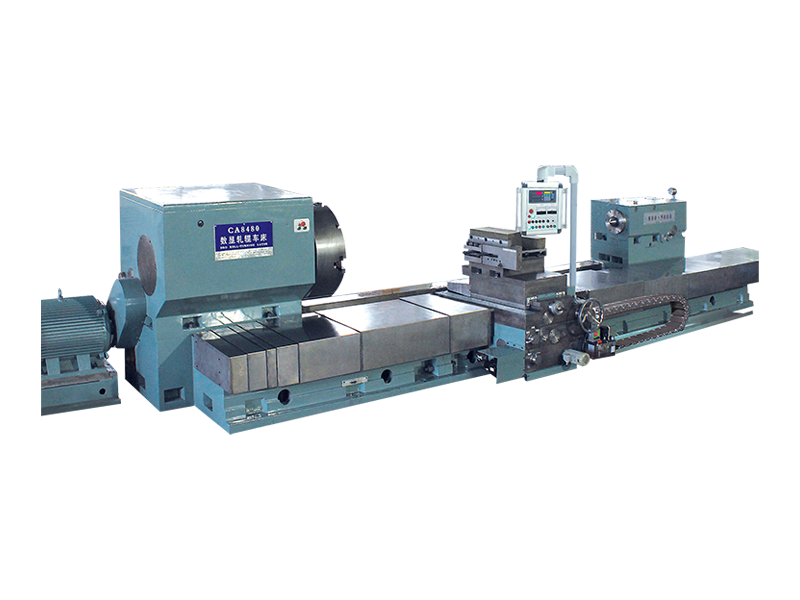
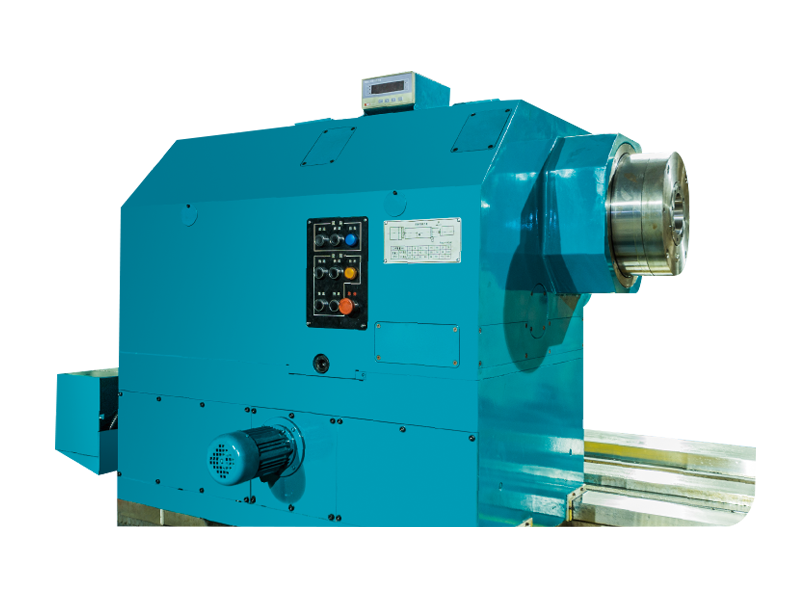 CK84125 Heavy-Duty CNC Roll Turning LatheFor post-weld sizing and roll maintenance, this heavy roll lathe provides Ø1250 mm swing, up to 7000 mm length and 80 kN cutting capacity for large cylindrical work.View Product →
For work of that scale, a heavy roll turning lathe with generous swing and a rigid bed is a workhorse: it can take interrupted cuts through weld reinforcement and still leave a clean finishing pass. Shops that already own one often find it becomes the final sizing station for post-weld machining as well as routine roll maintenance.
Answer those honestly and the equipment specification usually writes itself.
Automation in structural steel works best when it is treated as a systems problem rather than a robot purchase. The torch is the visible part, but the accuracy comes from preparation, from fixturing, and from the machined components that hold a heavy weldment steady while it turns.
If you are planning a cell, or finding that an existing one struggles with run-out, taper or inconsistent joint geometry, it is worth looking at the machine side of the equation first. You can browse our heavy machine tool range or talk to our engineers about the parts you need to hold true — that conversation usually saves more time than another round of programming tweaks.

 Download Material

 E-mail: [email protected]
 Mob: +86-13806297906
 Tel: +86-513-85562198
 Add:No. 99 Tiantong Road, Nantong City, Jiangsu Province.
Factory scene
Copyright@ Jiangsu Dingshun Heavy duty Machine Tool Co., Ltd. All Rights Reserved.




 English
 русский
 Español
 عربى