Content
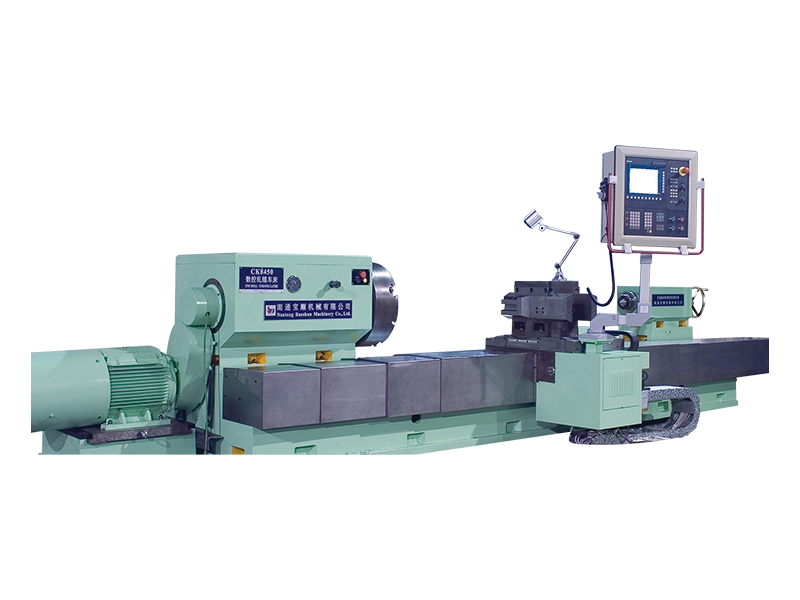
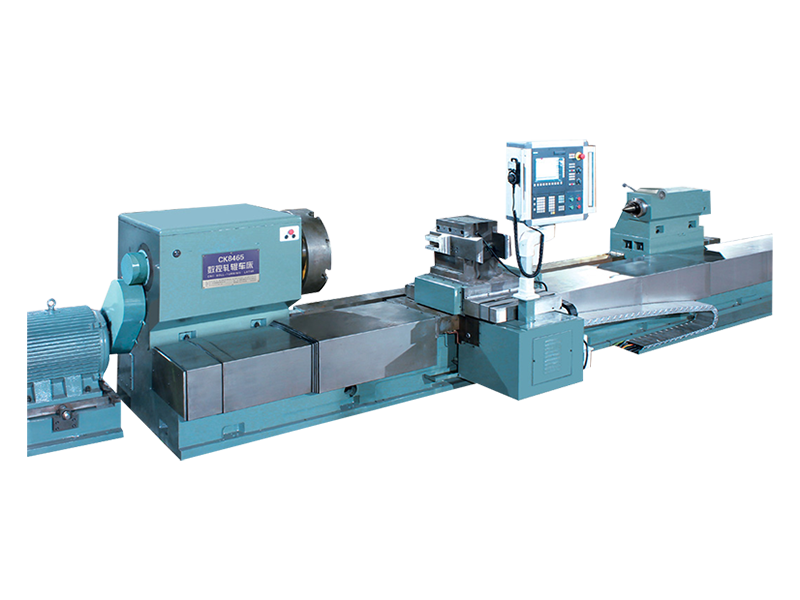
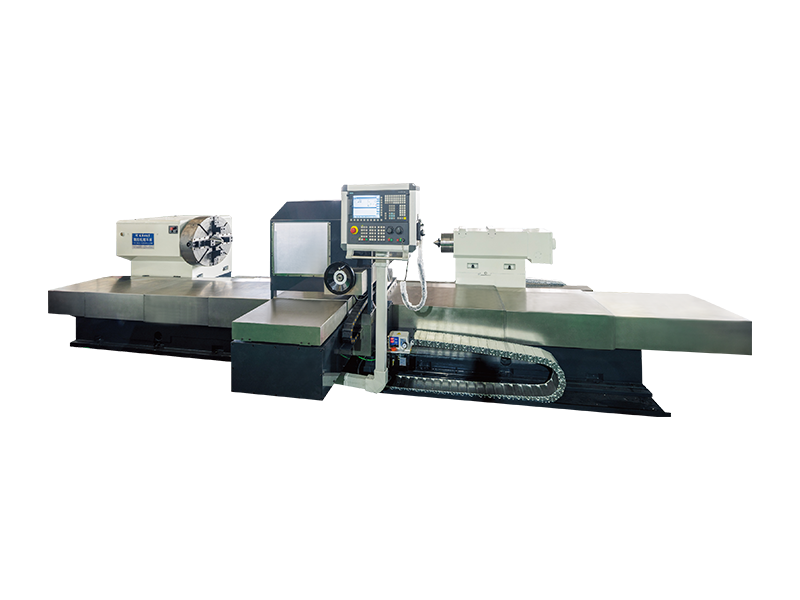
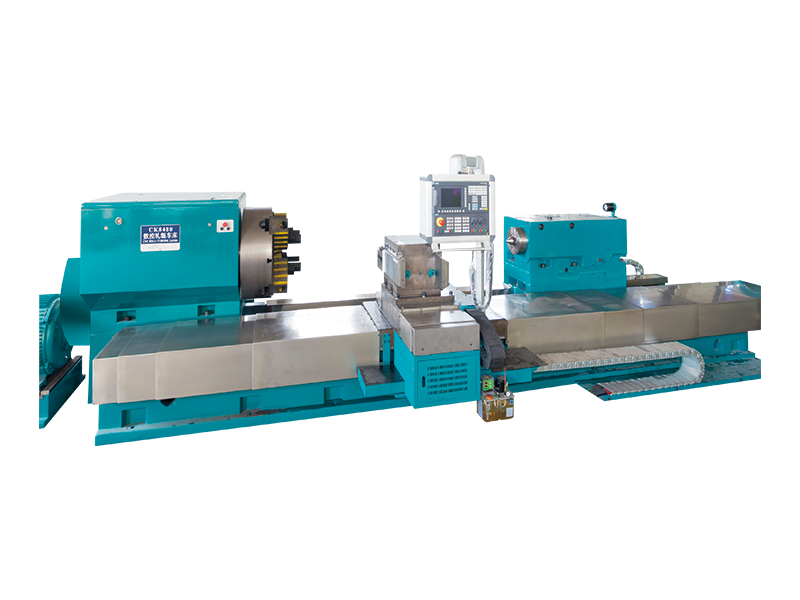
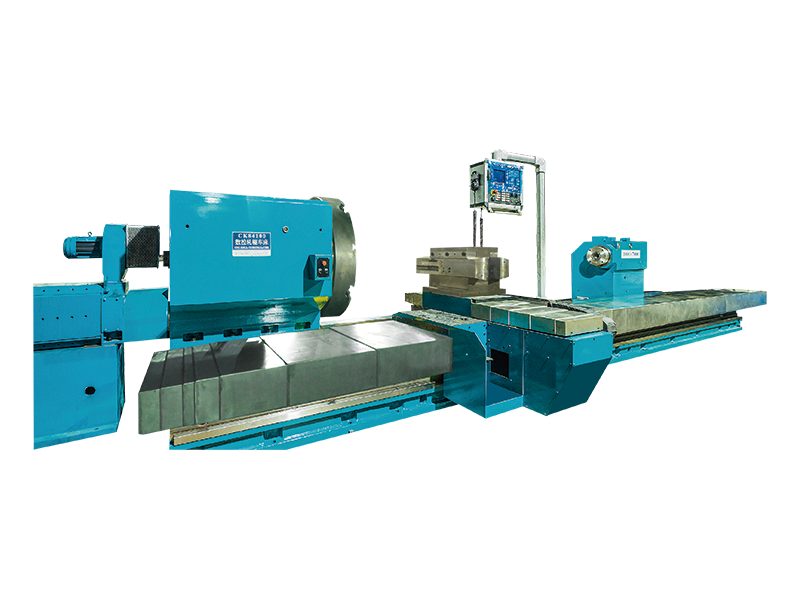
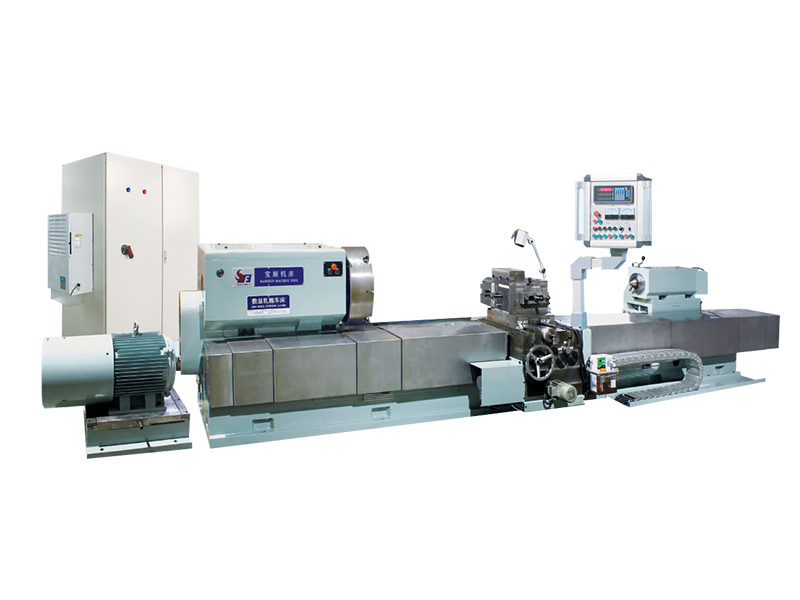
CNC roll grinders generally fall into one of two configurations, and understanding the difference matters more for buyers than it might first appear, since each approach handles large or heavy rolls differently. In a wheel-traverse machine, the grinding wheel itself moves horizontally along the length of a stationary, rotating roll held on a fixed worktable. In a table-traverse machine, the roll and worktable move horizontally past a stationary grinding wheel, with in-feed depth adjusted through the carriage moving toward or away from the wheel rather than the wheel traveling along the roll.
Wheel-traverse designs are generally favored for very large or heavy rolls, since the roll itself never needs to move during the grinding pass, reducing the risk of vibration or positional drift that can occur when a heavy workpiece is repeatedly shifted on the table. Table-traverse machines, by contrast, can offer simpler wheelhead maintenance since the grinding wheel assembly stays in a fixed location, though this comes at the cost of needing a longer, more robust table travel system to accommodate the full roll length. Choosing between the two often comes down to the typical roll size and weight a shop processes regularly, rather than one configuration being universally superior.
Many industrial rolls — particularly work rolls used in metal rolling mills and rolls used in printing or coating lines — aren't ground perfectly cylindrical on purpose. A slight curvature, known as crowning, is deliberately ground into the roll's profile to compensate for roll deflection under load, since a roll under heavy pressure across its width naturally bows slightly in the middle, and an uncrowned roll would produce uneven thickness or pressure distribution across the material it processes. CNC roll grinders capable of computer-controlled crowning can produce several distinct profile types depending on the application's deflection characteristics.
| Crown Profile | Shape Characteristic | Typical Use |
|---|---|---|
| Parabolic | Smooth, continuously curved profile | General deflection compensation across a broad load range |
| Radial | Constant-radius curvature | Applications needing a simple, predictable curve |
| Straight-tapered | Linear diameter change along roll length | Directional load compensation, edge-to-edge tapering needs |
Custom concave and convex crown combinations are also possible on more advanced CNC systems, which matters for applications with asymmetric loading or unusual deflection patterns that a standard symmetrical crown wouldn't correct. Specifying the exact crown profile and compensation curve needed for a given rolling mill or coating line setup, rather than defaulting to a generic parabolic crown, is what separates a roll that performs consistently under load from one that requires frequent readjustment.
Total indicated runout, commonly abbreviated TIR, measures how much a roll's surface deviates from perfectly true rotation around its central axis, and it's one of the most important quality metrics a CNC roll grinder needs to hit consistently. A roll with excessive TIR wobbles slightly as it rotates, even if the deviation is measured in microns, which translates into uneven pressure distribution, vibration, and accelerated wear on both the roll itself and any bearings or mating components it interacts with during operation. Grinding to a tight TIR specification requires not just a precise grinding wheel and spindle, but also a rigid machine bed and headstock/tailstock alignment that doesn't drift over the length of a long grinding pass.
Buyers should confirm what TIR tolerance a machine is actually capable of holding across the full range of roll diameters and lengths they intend to process, since a machine's best-case precision spec, often quoted for a smaller test workpiece, doesn't always carry over to the largest rolls within its rated capacity.
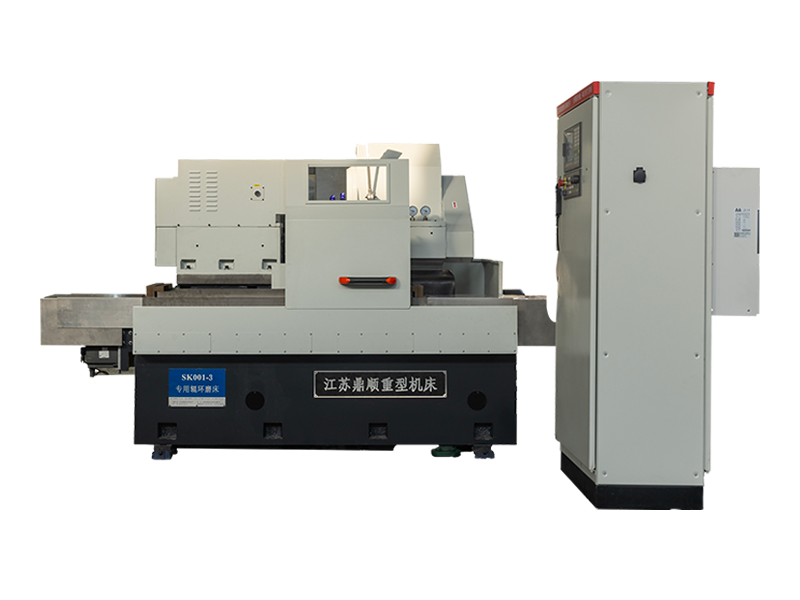
One of the biggest advantages CNC roll grinders offer over older manual or semi-manual grinding setups is in-process gauging — measurement systems that track roll diameter and position continuously during the grinding cycle rather than requiring the operator to stop, measure, and readjust manually. Linear encoders and gratings integrated into the machine's axes provide closed-loop position feedback, often accurate to a fraction of a micron, which allows the CNC system to make micro-adjustments to feed rate and depth automatically as the grind progresses, rather than relying solely on a pre-programmed cutting path that assumes a perfectly consistent material removal rate.
This real-time feedback matters most on long grinding passes or when working with rolls that have inconsistent hardness across their surface — a common scenario with rolls that have been previously used and now have localized wear or hardening from prior service. Without in-process gauging, an operator would need to make judgment calls about feed adjustments based on periodic manual measurement, introducing both time delay and human variability into the final result. Digital control systems that log this data throughout the grinding cycle also create a useful record for quality verification, letting a shop demonstrate exactly how a finished roll's dimensions were achieved rather than relying on a single final measurement taken after the fact.
The material a roll is made from significantly changes the grinding wheel selection, feed rate, and cooling approach a CNC roll grinder needs to use, and applying steel-grinding parameters to a rubber or composite roll — or vice versa — typically produces poor surface finish or premature wheel wear. Hardened steel rolls, common in rolling mills as work rolls or backup rolls, generally require harder-bonded abrasive wheels capable of maintaining their shape under sustained contact with a very hard workpiece, along with adequate coolant flow to manage the heat generated at the contact point. Rubber-covered rolls, often used in printing, coating, or paper processing lines, need a softer, more open-structured wheel that won't glaze over or generate excessive heat that could damage the rubber's surface integrity.
For shops that regularly process a mix of these materials, confirming that a CNC roll grinder's control software allows quick recall of stored grinding parameter sets for each material type saves considerable setup time compared to manually re-entering feed rates, wheel speeds, and dwell settings each time the material changes.
Grinding a new roll to final specification is a fundamentally different task than refinishing a roll that's already seen service, since a used roll typically arrives with uneven wear patterns, surface pitting, or a chrome plating layer that needs to be accounted for before grinding parameters are set. Hardened tool steel rolls prepared for refinishing sometimes need an initial clean-up pass specifically to establish a true, consistent surface before the final precision grind can proceed, since grinding directly to final tolerance over an uneven worn surface can leave residual irregularities beneath the new finish that surface measurement alone won't catch.
Chrome-plated rolls add another layer of consideration, since the chrome layer's hardness and thickness differ from the base roll material, and grinding through an uneven chrome layer without accounting for this difference can result in inconsistent surface hardness across the finished roll. Shops handling both new manufacturing and refinishing work benefit from a CNC roll grinder with flexible programming that can accommodate an initial roughing pass distinct from the final precision pass, rather than a machine built around a single fixed grinding sequence optimized only for new, unworn stock.

 Download Material

 E-mail: [email protected]
  Mob: +86-13806297906
  Tel: +86-513-85562198
  Add:No. 99 Tiantong Road, Nantong City, Jiangsu Province.
Factory scene

Copyright@ Jiangsu Dingshun Heavy duty Machine Tool Co., Ltd. All Rights Reserved.




 English
  русский
  Español
  عربى
عربى